One of the episodes in the ESPN Classic series on the 1972 Munich Summer Olympics focused on USA basketball. This 2-hour special (which will be re-aired a few more times) contained original ABC footage from 4 of the USA games. Over half of the show was devoted to the gold medal game against the USSR.
Frank Gifford and Bill Russell were the primary basketball announcers and called the final. However, Bill Flemming worked with Russell on a few games. (Gifford also called wrestling in Munich.) The special included Olympic host Chris Schenkel leading into the game coverage (which was shown on tape delay) and providing the results in advance.
Gifford sounded out of his element calling basketball play-by-play. At times, ABC showed a fullscreen view of the scoreboard while game action was taking place. At one point, you could hear loud coughing (presumably Russell) and soon afterwards, it sounded like a microphone got switched off.
Throughout the end of the controversial gold medal game, Gifford seemed extremely confused although it is hard to blame him too much considering the bizarre scene and strange actions by the officials. Right as the USSR was about to inbound the second time with 3 seconds left, ABC inexplicably cut to a shot of the scoreboard and missed the attempted play. After the finish, Gifford provided the incorrect score when he referred back to the earlier apparent USA victory. For some reason, Russell, after making a comment during free throws with 1:50 left on the game clock, was not heard on-air for the rest of the game.
Friday, August 31, 2012

Tuesday, August 28, 2012
ESPN Classic series on the 1972 Summer Olympics
Over the next two weeks, ESPN Classic is running a series to mark the 40th anniversary of the 1972 Summer Olympics. These episodes titled Summer Olympics - 1972 Munich feature the original ABC telecast footage. This series includes episodes on:
- Olga Korbut
- Mark Spitz
- USA Track controversy
- USA-USSR basketball final
- Marathon (won by Frank Shorter)
- USA boxing (Ray Seales)
- USA swimming and diving
- USA wrestling
- USA women's gynmastics
- Tragedy at Munich
- and more
Monday, August 27, 2012
Estimating the total number of MLB games broadcast by Vin Scully
Recently the Dodgers announced that the legendary Vin Scully will return in 2013 for a 64th season of broadcasting games for the franchise. On the heels of this news, a member of the506 wondered how many Major League Baseball games Scully has called during his career and decided to initiate a collaborative effort towards estimating that number. (Note: Free registration required to view this forum thread on the506.)
As of this writing, the estimate (which counts regular season, postseason, and All-Star games) is that Scully will have broadcast a total of 9183 MLB games by the end of the 2012 regular season. The number includes his network (NBC television and CBS radio) appearances along with his local TV/radio work for the Dodgers.
As of this writing, the estimate (which counts regular season, postseason, and All-Star games) is that Scully will have broadcast a total of 9183 MLB games by the end of the 2012 regular season. The number includes his network (NBC television and CBS radio) appearances along with his local TV/radio work for the Dodgers.
Sunday, August 19, 2012
Error by filmmaker in ESPN 30 for 30 Pony Exce$$ documentary
One of the best episodes from the ESPN 30 for 30 documentary series was Pony Exce$$ which chronicled the 1980s SMU football program. An NCAA investigation into illegal payments to players led to the school receiving the so-called "death penalty".
Starting around the 28:55 mark, the film devotes a few minutes to the 10/25/1980 SMU game at Texas. This segment contains ABC TV footage featuring announcers Al Michaels and Lee Grosscup allegedly previewing this matchup between the Mustangs and Longhorns. The documentary inserts the 10/25/1980 date on the screen right after the first ABC clip and later describes this game as being on "national TV".
However, there are several problems here. ABC did not televise this 1980 game at all. ABC covered nine regional games in two timeslots that afternoon (noon and 3:30 pm ET), but not the game from Austin which started at 2 pm. The ABC video clip contains a CFA logo, but the CFA TV package didn't exist in 1980. Also, Michaels and Grosscup didn't work together in 1980.
It turns out that this ABC footage is actually from an SMU-Texas game in 1984. The insertion of this clip into the otherwise excellent documentary was a definite error by the filmmaker.
Starting around the 28:55 mark, the film devotes a few minutes to the 10/25/1980 SMU game at Texas. This segment contains ABC TV footage featuring announcers Al Michaels and Lee Grosscup allegedly previewing this matchup between the Mustangs and Longhorns. The documentary inserts the 10/25/1980 date on the screen right after the first ABC clip and later describes this game as being on "national TV".
However, there are several problems here. ABC did not televise this 1980 game at all. ABC covered nine regional games in two timeslots that afternoon (noon and 3:30 pm ET), but not the game from Austin which started at 2 pm. The ABC video clip contains a CFA logo, but the CFA TV package didn't exist in 1980. Also, Michaels and Grosscup didn't work together in 1980.
It turns out that this ABC footage is actually from an SMU-Texas game in 1984. The insertion of this clip into the otherwise excellent documentary was a definite error by the filmmaker.
Sunday, August 12, 2012
Golf Channel documentary on Snead/Nelson/Hogan
Golf Channel is premiering a film on Mon 8/13 at 9 pm ET which chronicles the impact of Sam Snead, Byron Nelson, and Ben Hogan on the game of golf. This documentary titled American Triumvirate includes interviews from other greats such as Jack Nicklaus, Johnny Miller, and Ken Venturi. Golf Channel will re-air this special multiple times in the upcoming days.
This preview clip from the episode features Nicklaus discussing Nelson:
This preview clip from the episode features Nicklaus discussing Nelson:
Sunday, August 5, 2012
Curt Gowdy calling an Olympic swimming event in 1976
Want to hear Curt Gowdy announcing a swimming race? Here is a video of the women's 4x100m freestyle relay from the 1976 Olympics in Montreal as the USA team took the gold medal over the favored East Germans. Gowdy called the race for ABC along with analyst Donna DeVarona. Gowdy worked for NBC at the time and was still their #1 NFL play-by-play voice, but NBC loaned Gowdy to ABC for the Montreal Olympics. Gowdy also called basketball with Bill Russell at the 1976 games.
A few items of note from the clip: When the announcers appear on the screen at the 0:53 mark wearing the famous ABC yellow blazers, their press credentials are clearly visible on camera. Around the 6:23 mark, Gowdy twice cuts off DeVarona and talks for almost 20 seconds recapping the lane assignments before allowing her to make a point. Also, multiple times Gowdy refers to the event as the "4 times 100 meters".
A few items of note from the clip: When the announcers appear on the screen at the 0:53 mark wearing the famous ABC yellow blazers, their press credentials are clearly visible on camera. Around the 6:23 mark, Gowdy twice cuts off DeVarona and talks for almost 20 seconds recapping the lane assignments before allowing her to make a point. Also, multiple times Gowdy refers to the event as the "4 times 100 meters".
Friday, August 3, 2012
Historic Olympic Broadcaster Logos
I stumbled onto an interesting feature on a blog which contains images of the broadcaster logos for the United States networks which televised the Olympic games going back to the 1960s. The site has some commentary on the designs of these broadcaster logos along with images of the official logos for each Olympiad and provides an intriguing look at how these emblems have evolved over time. It also includes historical background information on the US TV coverage over the years such as rights fees and hours of programming.
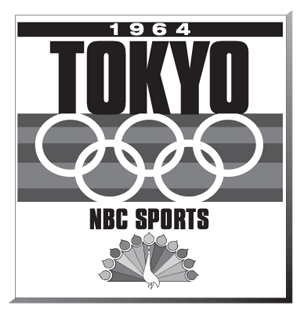
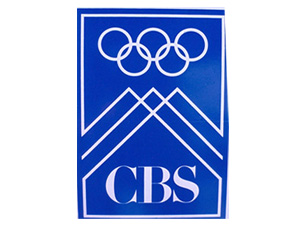
Here are a few of the TV broadcaster logos: NBC Tokyo 1964, ABC Lake Placid 1980, and CBS Albertville 1992.


Here are a few of the TV broadcaster logos: NBC Tokyo 1964, ABC Lake Placid 1980, and CBS Albertville 1992.

Friday, July 27, 2012
ABC clip of spectacular Olga Korbut routine from 1972 Olympics
Here is perhaps the most famous gymnastics performance of all time. During the team competition of the 1972 Olympics in Munich. 17-year old Olga Korbut of the USSR executed a never before seen maneuver on the uneven parallel bars. This routine propelled the then unknown Korbut into a household name and helped fuel interest in gymnastics. The electritfying move which became known as the Korbut Flip was subsequently banned for safety reasons.
Jim McKay called the action for ABC and the enthusiastic analyst was former gymnastics coach Gordon Maddux.
Jim McKay called the action for ABC and the enthusiastic analyst was former gymnastics coach Gordon Maddux.
Monday, July 23, 2012
Remembering Dave Wottle winning 1972 Olympic 800 meters
While the 1972 Summer Olympics are unfortunately best known for the terrorist attack on Sept 5, the Munich games featured many memorable events during the competition. I still vividly recall watching the 800 meter final on Sept 2 when Dave Wottle of the USA came from well behind to win the gold medal at the wire. Wottle famously ran the race wearing a golf cap. The IOC has since banned hats during track events.
The ABC announcers were Jim McKay and former middle distance runner Marty Liquori. This is a classic call by McKay who handled track and field and gymnastics during the 1972 games. Of course, he is best remembered for his coverage of the hostage crisis a few days later.
At the start of the race, ABC displayed individual graphics for each runner, but never showed one for lane 8 as the event started while McKay was still announcing the participants. The end of the clip also features Chris Schenkel who was the primary ABC host for the Munich Olympiad.
The ABC announcers were Jim McKay and former middle distance runner Marty Liquori. This is a classic call by McKay who handled track and field and gymnastics during the 1972 games. Of course, he is best remembered for his coverage of the hostage crisis a few days later.
At the start of the race, ABC displayed individual graphics for each runner, but never showed one for lane 8 as the event started while McKay was still announcing the participants. The end of the clip also features Chris Schenkel who was the primary ABC host for the Munich Olympiad.
Sunday, July 1, 2012
Observations on the 1967 NIT final footage on MSG Vault
Recently, I posted about the MSG Vault episode which included footage from the CBS telecast of the 1967 NIT championship game featuring Walt Frazier. After watching my recording a few times, I will share some observations:
The show contained a fair amount of footage from the original telecast. The audio and video quality was fantastic considering this game took place 45 years ago. What a find by the Carbondale PBS station!
I found several aspects of the playing surface quite noticeable. The floor contains mostly light colored boards interspersed with some darker ones, but not in any specific pattern. The midcourt stripe was yellow as were other court lines. The color of these markings was not significantly distinguishable from that of the light floorboards making these lines rather difficult to see. Also striking was the complete lack of logos on the floor. There was nothing on the court surface which identified this as an NIT game or the site as Madison Square Garden. You can see the court in the video clip I added to my original post.
Play-by-play man Tom Kelly did a decent job, but analyst Frank Gifford offered very little commentary during game action. There was also an odd moment during the opening to the telecast. As Kelly set the scene, Gifford's head shifted awkwardly several times as he almost seemed to be going out of his way to look anywhere but at the camera. You can see also this segment in the same video clip.
The only CBS graphic I noticed was the one identifying Frazier as the MVP during the postgame interview. A few times, CBS superimposed a shot of the stadium scoreboard underneath the action. And Kelly mentioned the score quite frequently during his play-by-play. Throughout the telecast, you can also clearly hear the public address announcer providing information on score, fouls, substitutions, etc.
If you haven't seen this and have access to MSG Network, I highly recommend this episode which will be re-airing many times over the next few weeks.
The show contained a fair amount of footage from the original telecast. The audio and video quality was fantastic considering this game took place 45 years ago. What a find by the Carbondale PBS station!
I found several aspects of the playing surface quite noticeable. The floor contains mostly light colored boards interspersed with some darker ones, but not in any specific pattern. The midcourt stripe was yellow as were other court lines. The color of these markings was not significantly distinguishable from that of the light floorboards making these lines rather difficult to see. Also striking was the complete lack of logos on the floor. There was nothing on the court surface which identified this as an NIT game or the site as Madison Square Garden. You can see the court in the video clip I added to my original post.
Play-by-play man Tom Kelly did a decent job, but analyst Frank Gifford offered very little commentary during game action. There was also an odd moment during the opening to the telecast. As Kelly set the scene, Gifford's head shifted awkwardly several times as he almost seemed to be going out of his way to look anywhere but at the camera. You can see also this segment in the same video clip.
The only CBS graphic I noticed was the one identifying Frazier as the MVP during the postgame interview. A few times, CBS superimposed a shot of the stadium scoreboard underneath the action. And Kelly mentioned the score quite frequently during his play-by-play. Throughout the telecast, you can also clearly hear the public address announcer providing information on score, fouls, substitutions, etc.
If you haven't seen this and have access to MSG Network, I highly recommend this episode which will be re-airing many times over the next few weeks.
Friday, June 29, 2012
The 25th anniversary of Sports Radio WFAN
Sports Radio 66 WFAN in New York celebrates its 25th anniversary this weekend. On 7/1/1987 radio station WHN 1050 AM transformed from a country music station which held the rights to the reigning World Series champion New York Mets into a 24x7 sports format. WFAN later moved to 660 on the AM dial and remains the radio flagship of the Mets.
Over its 25 years, WFAN has held rights to other sports teams in the NYC market and featured many unique radio personalities including Mike Francesa and Christopher Russo who teamed up for 19 years as Mike and the Mad Dog in the afternoon drive slot. The success of WFAN led to a plethora of all-sports formats in markets across the country.
I was one of the listeners on that inaugural day and remember Jim Lampley hosting the first show.
Here is the original WFAN 1987 weekday schedule of hosts:
6 am - 10 am: Greg Gumbel
10 am - 1 pm: Jim Lampley
1 pm - 3 pm: Art Shamsky
3 pm - 7 pm: Pete Franklin
7 pm - midnight: Howie Rose
midnight - 6 am: Steve Somers
Note: Franklin was recovering from a heart attack when WFAN launched so the station rotated a number of fill-in hosts in the afternoon drive slot until Franklin was healthy enough to take over.
Over its 25 years, WFAN has held rights to other sports teams in the NYC market and featured many unique radio personalities including Mike Francesa and Christopher Russo who teamed up for 19 years as Mike and the Mad Dog in the afternoon drive slot. The success of WFAN led to a plethora of all-sports formats in markets across the country.
I was one of the listeners on that inaugural day and remember Jim Lampley hosting the first show.
Here is the original WFAN 1987 weekday schedule of hosts:
6 am - 10 am: Greg Gumbel
10 am - 1 pm: Jim Lampley
1 pm - 3 pm: Art Shamsky
3 pm - 7 pm: Pete Franklin
7 pm - midnight: Howie Rose
midnight - 6 am: Steve Somers
Note: Franklin was recovering from a heart attack when WFAN launched so the station rotated a number of fill-in hosts in the afternoon drive slot until Franklin was healthy enough to take over.
Thursday, June 21, 2012
MSG Network to air footage from 1967 NIT title game featuring Walt Frazier
The MSG Vault series on MSG Network will feature color video from the original CBS telecast of the 1967 NIT championship game. In that contest, Southern Illinois led by Walt Frazier defeated a Marquette team coached by Al McGuire. MSG Network (DIRECTV 634) will premiere this episode titled Before He Was Clyde on Saturday 6/23 at 9 pm ET and will re-air it multiple times. Al Trautwig is the host of MSG Vault.
A PBS station in Illinois recently discovered a videotape of the game and this will be the first time this footage has been shown on TV since the live telecast in 1967. The CBS broadcast team was Tom Kelly on play-by-play with Frank Gifford as the analyst.
A PBS station in Illinois recently discovered a videotape of the game and this will be the first time this footage has been shown on TV since the live telecast in 1967. The CBS broadcast team was Tom Kelly on play-by-play with Frank Gifford as the analyst.
ESPN Classic to show 1973 King-Riggs Battle of the Sexes
On Saturday 6/23 at 9 pm ET, ESPN Classic is re-airing the Battle of the Sexes tennis match between Billie Jean King and Bobby Riggs during the ESPN commemoration of the 40th anniversary of Title IX. ABC televised this event in prime time from the Houston Astrodome on Thursday 9/20/1973 with Howard Cosell calling the action. The co-analysts were tennis pros Rosemary Casals and Gene Scott. Both Casals and Scott received quite negative reviews for their on-air commentary. Frank Gifford was also part of the telecast doing interviews.
An interesting sidebar to this telecast: ABC had originally planned to use former tennis pro Jack Kramer as a co-analyst along with Casals. However, King was displeased with Kramer's treatment of women's tennis and threatened to withdraw from the match on short notice if Kramer remained involved. ABC executive producer Roone Arledge agreed to take Kramer off the commentary team and named Scott as a replacement. Kramer appeared during the opening of the ABC telecast and announced that he was stepping down. I believe that Kramer's statement will air during the ESPN Classic replay.
An interesting sidebar to this telecast: ABC had originally planned to use former tennis pro Jack Kramer as a co-analyst along with Casals. However, King was displeased with Kramer's treatment of women's tennis and threatened to withdraw from the match on short notice if Kramer remained involved. ABC executive producer Roone Arledge agreed to take Kramer off the commentary team and named Scott as a replacement. Kramer appeared during the opening of the ABC telecast and announced that he was stepping down. I believe that Kramer's statement will air during the ESPN Classic replay.
Friday, June 15, 2012
Classic Wimbledon on ESPN Classic
ESPN Classic is replaying many past Wimbledon championship matches over the next week. The broadcast team of Dick Enberg and Bud Collins called many of these on NBC starting in the early 1980s. Here is a subset of the schedule:
Here is a clip from the famous 4th set tiebreaker of the 1980 match called by Bud Collins and Donald Dell:
- 1975 Ashe-Connors: Tue 6/19 at 1:30 am
- 1977 Borg-Connors: Tue 6/19 at 4 am
- 1982 Navratilova-Evert: Wed 6/20 at 2 am
- 1984 Navratilova-Evert: Wed 6/20 at 4 am
- 1980 Borg-McEnroe: Wed 6/20 at 1 pm
- 1981 McEnroe-Borg: Wed 6/20 at 3 pm
- 1982 Connors-McEnroe: Thu 6/21 at 4 am
- 1984 McEnroe-Connors: Thu 6/21 at 10 am
- 1985 Navratilova-Evert: Fri 6/22 at 2 am
- 1988 Graf-Navratilova: Fri 6/22 at 4 am
Here is a clip from the famous 4th set tiebreaker of the 1980 match called by Bud Collins and Donald Dell:
Monday, June 11, 2012
NBC documentary on 1962 US Open win by Jack Nicklaus
NBC will air a documentary titled The 1962 US Open: Jack's First Major on Sunday 6/17 at 2 pm ET. This USGA special co-produced by Ross Greenburg will cover the victory by Jack Nicklaus 50 years ago at Oakmont capped by his 18-hole playoff with Arnold Palmer. The film contains unique archival footage from the USGA Museum. It also includes recent interviews with Nicklaus, Palmer, and various golf media members in this retrospective on the first of the 18 professional majors won by the Golden Bear.
Friday, June 8, 2012
NBA TV documentary on 1992 Dream Team
NBA TV is premiering a documentary on the 1992 USA Olympic basketball team on Wed 6/13 at 9 pm ET titled The Dream Team. This special contains recent interviews with all 12 players and includes rare footage from 20 years ago.
Sunday, June 3, 2012
Remembering the classic 1976 NBA Finals game 5
Tomorrow marks the 36th anniversary of the most memorable NBA game I have ever viewed. The Boston Celtics defeated the Phoenix Suns in triple overtime in game 5 of the NBA Finals on 6/4/1976 in a contest best known for the riveting events during the end of the second OT.
The CBS announcers that night were Brent Musburger, Rick Barry, and Mendy Rudolph. The young Musburger was in his second season as lead play-by-play voice for the NBA. Brent brought a lot of enthusiasm to the telecasts, but could be rather loud and tended to dominate the microphone. Rudolph was a former referee who CBS installed as its top analyst for the 1975-76 season after a forgettable year with Oscar Roberston in that role. Most analysts tend to be former players or coaches, but Mendy brought a unique perspective especially on officiating calls or rules issues.
Barry was still an active player who CBS added to the TV crew for the championship series after his Golden State Warriors lost in the conference finals. During the 1970s, CBS seemed to use a different #1 analyst almost every regular season. But during the playoffs, CBS added Barry to its broadcast crew every year from 1974 through 1980 once his team was eliminated (with the exception of 1975 when Barry played in the NBA Finals). Despite being a late addition to the 1976 TV crew, Barry clearly served as the #1 analyst on that series with Rudolph taking an ancillary role. While not a polished broadcaster, Barry was quick to offer opinions and added more insight than the other CBS NBA analysts of this era.
The first clip covers the dramatic ending to the second OT: The John Havlicek running bank shot....the fan attacking referee Richie Powers....the intentional timeout called by Paul Westphal knowing the Suns were out of timeouts thereby essentially trading a technical foul for the opportunity to advance the ball to halfcourt.....the turnaround shot at the buzzer by Garfield Heard.
After the Havlicek shot, notice how quickly Barry states that time should be put back on the clock after Musburger incorrectly declared the game over. And note how Rudolph suggests that the Suns might take advantage of the obscure aspect of the illegal timeout rule to maximize their chance of winning the game. The NBA later eliminated that quirk in the rule. I also found it odd that on both of the inbounds plays in this sequence, Musburger felt the need to point out that the clock wouldn't start until the ball is touched.
The second video covers highlights including the opening to the telecast, the end of regulation and the end of each OT. This package provides some greater context showing the Phoenix comeback capped by the Westphal steal which set up the final seconds of the 2nd OT. The intro segment illustrates the way that Musburger would set the scene for the game.
The CBS announcers that night were Brent Musburger, Rick Barry, and Mendy Rudolph. The young Musburger was in his second season as lead play-by-play voice for the NBA. Brent brought a lot of enthusiasm to the telecasts, but could be rather loud and tended to dominate the microphone. Rudolph was a former referee who CBS installed as its top analyst for the 1975-76 season after a forgettable year with Oscar Roberston in that role. Most analysts tend to be former players or coaches, but Mendy brought a unique perspective especially on officiating calls or rules issues.
Barry was still an active player who CBS added to the TV crew for the championship series after his Golden State Warriors lost in the conference finals. During the 1970s, CBS seemed to use a different #1 analyst almost every regular season. But during the playoffs, CBS added Barry to its broadcast crew every year from 1974 through 1980 once his team was eliminated (with the exception of 1975 when Barry played in the NBA Finals). Despite being a late addition to the 1976 TV crew, Barry clearly served as the #1 analyst on that series with Rudolph taking an ancillary role. While not a polished broadcaster, Barry was quick to offer opinions and added more insight than the other CBS NBA analysts of this era.
The first clip covers the dramatic ending to the second OT: The John Havlicek running bank shot....the fan attacking referee Richie Powers....the intentional timeout called by Paul Westphal knowing the Suns were out of timeouts thereby essentially trading a technical foul for the opportunity to advance the ball to halfcourt.....the turnaround shot at the buzzer by Garfield Heard.
After the Havlicek shot, notice how quickly Barry states that time should be put back on the clock after Musburger incorrectly declared the game over. And note how Rudolph suggests that the Suns might take advantage of the obscure aspect of the illegal timeout rule to maximize their chance of winning the game. The NBA later eliminated that quirk in the rule. I also found it odd that on both of the inbounds plays in this sequence, Musburger felt the need to point out that the clock wouldn't start until the ball is touched.
The second video covers highlights including the opening to the telecast, the end of regulation and the end of each OT. This package provides some greater context showing the Phoenix comeback capped by the Westphal steal which set up the final seconds of the 2nd OT. The intro segment illustrates the way that Musburger would set the scene for the game.
Tuesday, May 22, 2012
ESPN Classic tribute to the Indianapolis 500
ESPN Classic is replaying the original ABC telecasts of several Indy 500s. ABC provided live coverage of the 500 starting in 1986. Prior to that, ABC aired this event on tape delay with Jim McKay and Jackie Stewart handling the commentary most years. Here are selected races from this special theme week (see above link for the complete schedule).
- 1980 - Wed 5/23 at 1 am
- 1983 - Wed 5/23 at 3 am
- 1984 - Wed 5/23 at 11 am
- 1988 - Wed 5/23 at 1 pm
- 1991 - Wed 5/23 at 3 pm
- 1986 - Wed 5/23 at 5 pm (first live telecast)
- 1987 - Thu 5/24 at 1 am
- 1970 - Thu 5/24 at 9 am
- 1971 - Thu 5/24 at 10 am
- 1978 - Thu 5/24 at 1 pm
- 1977 - Tue 5/29 at 8 pm (4th win by AJ Foyt)
- 1982 - Wed 5/30 at 6:30 pm
- 1967 - Thu 5/31 at 6 pm (3rd win by AJ Foyt)
Saturday, May 12, 2012
Looking back on the Rick Barry "watermelon grin" comment
Today marks the 31st anniversary of the controversial "watermelon grin" remark made by CBS analyst Rick Barry. It took place early in the second half of game 5 of the 1981 NBA Finals on 5/12/1981 as the announcers were discussing photos from the 1956 Summer Olympics. This clip illustrates the incredibly awkward exchange which became most noticeable when CBS put the broadcasters on camera. Co-analyst Bill Russell clearly didn't appreciate the attempt at humor by Barry or the subsequent prodding by play-by-play man Gary Bender.
The incident bothered Russell who offered less analysis than usual for the remainder of that telecast. Barry insisted he was unaware of the racial overtones of his remark and later apologized to Russell who eventually forgave him.
CBS televised this game on late night tape delay at 11:30 pm and the margin was 26 points at the time of the comments. Both of these factors limited the number of viewers who saw this segment of the original telecast. Despite the 2.5 hour delay, CBS either chose not to edit out the comments or wasn't aware of the sensitive nature of the remarks until later. Of course, this exchange took place while game action was going on so it would have been challenging for CBS to perform any kind of cleanup before the delayed telecast.
This episode came at a historical low point in TV coverage for the NBA as CBS produced four of the six 1981 Finals games on tape delay. It also turned out to be the only season for the trio of Bender, Barry, and Russell. CBS dropped Barry after the Finals. For the next season, CBS moved Bender to college games and paired Russell with Dick Stockton on the NBA. Interestingly, Barry and Russell would team up a few years later to call NBA telecasts on WTBS with Barry serving in the play-by-play role.
The incident bothered Russell who offered less analysis than usual for the remainder of that telecast. Barry insisted he was unaware of the racial overtones of his remark and later apologized to Russell who eventually forgave him.
CBS televised this game on late night tape delay at 11:30 pm and the margin was 26 points at the time of the comments. Both of these factors limited the number of viewers who saw this segment of the original telecast. Despite the 2.5 hour delay, CBS either chose not to edit out the comments or wasn't aware of the sensitive nature of the remarks until later. Of course, this exchange took place while game action was going on so it would have been challenging for CBS to perform any kind of cleanup before the delayed telecast.
This episode came at a historical low point in TV coverage for the NBA as CBS produced four of the six 1981 Finals games on tape delay. It also turned out to be the only season for the trio of Bender, Barry, and Russell. CBS dropped Barry after the Finals. For the next season, CBS moved Bender to college games and paired Russell with Dick Stockton on the NBA. Interestingly, Barry and Russell would team up a few years later to call NBA telecasts on WTBS with Barry serving in the play-by-play role.
Wednesday, April 25, 2012
ESPN Classic to replay 1975 World Series game 6
ESPN Classic will replay game 6 of the 1975 World Series (Reds-Red Sox) on Mon 4/30 at 3 pm ET. The game ended on a Carlton Fisk 12th inning home run. However, the famous camera angle of Fisk's reaction was not the result of planning by NBC, but was actually caused by a rat inside Fenway Park which was bothering the cameraman. This game which had been delayed 3 days by rain was ranked #1 on the recent MLB Network list of MLB Greatest Games. The NBC telecast was
called by Joe Garagiola, Tony Kubek, and Dick Stockton.
Some other notable baseball rebroadcasts coming up on ESPN Classic:
Some other notable baseball rebroadcasts coming up on ESPN Classic:
- 1992 NLCS game 7 on 4/27 at 1 pm
- 1986 World Series game 6 on 4/30 at 11 am
- 1960 World Series game 7 on 4/30 at 5 pm
- 1987 World Series game 6 on 5/2 at 5 pm
- 1977 World Series game 6 on 5/3 at 11 am
- 1986 ALCS game 5 on 5/3 at 1 pm
- 1986 ALCS game 7 on 5/3 at 3 pm
Sunday, April 15, 2012
CBS again omits Gary McCord from classic Masters footage
I recorded the recent CBS special Jim Nantz Remembers Augusta: The 1987 Masters which included footage from the final round of the original telecast. Once again, CBS went out of its way to ignore/hide the involvement of Gary McCord on the CBS broadcast team that day. In 1987, McCord was the CBS announcer on hole 14. The footage that CBS used in this special featured action from every back 9 hole including #14. However, these clips contained audio from every hole announcer on that telecast with the exception of McCord. Instead, CBS superimposed music and Jim Nantz narration over the footage it showed from the 14th.
In 2006, the inaugural Jim Nantz special covered the 1986 Masters on which McCord had also been the CBS announcer on the 14th hole. But on that special, the same thing happened as CBS showed some original footage from hole 14, but included no audio or mention of McCord who was last part of the Masters TV coverage in 1994.
In both cases, it seems obvious that the omission of McCord was intentional. What is unclear is whether CBS edited McCord out of the footage to avoid ruffling feathers with the Green Jacket Establishment or whether CBS did so under orders from the Lords of Augusta as a condition for approval in replaying this footage.
The 1987 Masters went to a playoff on holes 10 and 11. Interestingly, for its coverage of the playoff, CBS used the originally assigned hole announcer (Bob Murphy and Steve Melnyk respectively) along with main analyst Ken Venturi. Lead announcer Pat Summerall who was in the 18th hole tower was not part of the playoff coverage. Venturi called the playoff action from the fairway as he talked about getting club selections from the caddies.
The 1987 playoff coverage also leads to the intriguing question as to how the CBS Jim Nantz special would have handled this footage had McCord been the assigned hole announcer on one of these playoff holes, especially on the deciding hole. Or had a critical shot or memorable audio moment (along the lines of Verne Lundquist with "Yes Sir!" or Nantz with "The Bear has come out of hibernation.") from either of these Masters tournaments occurred at hole 14.
Non-broadcasting side note: I found it very interesting that some players had a caddy attend the flagstick on much shorter putts than you see today.
In 2006, the inaugural Jim Nantz special covered the 1986 Masters on which McCord had also been the CBS announcer on the 14th hole. But on that special, the same thing happened as CBS showed some original footage from hole 14, but included no audio or mention of McCord who was last part of the Masters TV coverage in 1994.
In both cases, it seems obvious that the omission of McCord was intentional. What is unclear is whether CBS edited McCord out of the footage to avoid ruffling feathers with the Green Jacket Establishment or whether CBS did so under orders from the Lords of Augusta as a condition for approval in replaying this footage.
The 1987 Masters went to a playoff on holes 10 and 11. Interestingly, for its coverage of the playoff, CBS used the originally assigned hole announcer (Bob Murphy and Steve Melnyk respectively) along with main analyst Ken Venturi. Lead announcer Pat Summerall who was in the 18th hole tower was not part of the playoff coverage. Venturi called the playoff action from the fairway as he talked about getting club selections from the caddies.
The 1987 playoff coverage also leads to the intriguing question as to how the CBS Jim Nantz special would have handled this footage had McCord been the assigned hole announcer on one of these playoff holes, especially on the deciding hole. Or had a critical shot or memorable audio moment (along the lines of Verne Lundquist with "Yes Sir!" or Nantz with "The Bear has come out of hibernation.") from either of these Masters tournaments occurred at hole 14.
Non-broadcasting side note: I found it very interesting that some players had a caddy attend the flagstick on much shorter putts than you see today.
Subscribe to:
Posts (Atom)