Monday, February 24, 2014

A look back at the 1964 Clay-Liston closed-circuit telecast

Tuesday marks the 50th anniversary of the 2/25/1964 heavyweight boxing match in Miami between challenger Cassius Clay (now known as Muhammad Ali) and defending champion Sonny Liston.

Theater Network Television, Inc (TNT). produced the closed-circuit telecast of this fight and carried it live at 10 pm ET on a Tuesday night. The announcers on that telecast were Steve Ellis and former heavyweight champion Joe Louis. The production was shown in over 350 theaters and arenas throughout North America. TNT also made the telecast available via satellite to Europe on a tape delay of a few hours.

ESPN Classic will replay this telecast on Tuesday 2/25 at 7 pm ET (with three repeat showings at two-hour intervals).

Per newspaper reports from 1964, tickets for that theater telecast ranged from $4 to $10 (compared to $20-$250 for those who attended the fight in Miami). More than 1.1 million theater seats were available across the USA. Many of the locations were movie theaters including some drive-ins. The telecast was also offered in some large capacity stadiums such as the Los Angeles Sports Arena and Cobo Hall in Detroit. And some community pay-TV networks provided an in-home feed for $3.

Theaters had to agree to provide non-racially segregated seating in order to stage the telecast. Some theaters in the south refused to agree with that contract provision and therefore could not show the event.

The match was also broadcast live by ABC Radio with Les Keiter handling the play-by-play and Howard Cosell contributing commentary between rounds and conducting interviews. Ex-boxer Rocky Marciano and active pro football star Jim Brown were also part of the radio broadcast crew.

This clip begins with the weigh-in and then contains the original TNT telecast of the fight starting around the 2:22 mark.


The telecast seems rather primitive even by 1970s standards, but it is great that such original boxing TV footage exists from a time period where relatively little survived from the major team sports. The production contained multiple awkward sequences. In round 3 after a flurry from Clay (around the 20:25 mark), you can hear a few bizarre incomplete statements from Ellis and then about 20 seconds of "dead air" before he resumes the blow-by-blow. As round 7 is about to begin around the 36:10 mark, Ellis exclaims "They might be stopping it!" and tells Louis to go up to the ring. But then the telecast leaves viewers hanging with almost 90 seconds of images with no announcer audio before we finally see Ellis and Louis together in the ring. Ironically, during this period of silence, you can see Cosell getting a radio interview with Clay before the TV crew is able to do so. During the chaotic post-flight scene, Ellis and Louis often spoke simultaneously. Whenever Louis appeared on-screen, he seemed to go out of his way to avoid looking at the camera.

Here are some clips which include portions of the original radio broadcast. This one covers the first round with Keiter calling the action.


And here is the finale with the radio audio starting at 0:48 on the clip. Once the match ended, the radio broadcast seemed to upstage the TV production as Cosell definitively told listeners about the match result, and then landed interviews with both fighters while TNT never aired any words from Liston. You can also see how quickly Cosell was able to get into position to talk to the new champion while TNT fumbled around.

Monday, February 17, 2014

Longest lasting network TV announcer duos

Joe Buck and Tim McCarver worked together from 1996-2013 in the Fox baseball TV booth. How does their on-air partnership of 18 years stack up historically against other network TV announcer duos? Which national broadcast pairings have remained intact the longest in various sports? Which tandems hold the longest active streaks? To follow up on my look last year at consecutive season streaks by network TV broadcasters, here is a summary of my research on similar streaks by pairs of announcers.

A few groundrules:
  • As in the earlier post, I am using a guideline that if a duo worked together for at least one regular season or playoff game during a season, then that season counts toward the streak.
  • I am only considering cases where exactly two announcers worked together in the TV booth. So I am not counting a pair of announcers who were part of a 3-man crew unless I found evidence that the pair worked as a duo for at least one qualifying game that season. (For completeness, I am planning a future post to cover such streaks by announcer trios.)
  • This post covers the NFL, MLB, NBA, college football, and college basketball on national TV networks. For each sport, I listed the longest 10 or so streaks.
Among the sports I researched, the record holders are Mike Patrick and Dick Vitale with a run of 23 consecutive seasons on college basketball. The legendary team of Pat Summerall and John Madden come in second with a streak of 21 years on the NFL. Overall, I found only six streaks longer than 15 seasons.

Here is the breakdown by sport:

* denotes active streak
# denotes active streak but which is not expected to continue


NFL

21:  Pat Summerall, John Madden  (1981-2001)
12:  Dick Enberg, Merlin Olsen  (1977-1988)
11:  Mike Patrick, Joe Theismann  (1988-1998)
11:  Kenny Albert, Daryl Johnston  (2003-2013) *
10:  Jim Nantz, Phil Simms  (2004-2013) *
 9:  Charlie Jones, George Ratterman  (1964-1972)
 9:  Joe Buck, Troy Aikman  (2005-2013) *
 8:  Ian Eagle, Solomon Wilcots  (2001-2008)
 8:  Greg Gumbel, Dan Dierdorf  (2006-2013) #
 7:  Dick Stockton, Matt Millen  (1994-2000)

Summerall and Madden have the longest NFL streak (a run that spanned a move from CBS to Fox). The tandem of Dick Enberg and Merlin Olsen holds second place for now. Kenny Albert and Daryl Johnston have the longest active streak. (Note: Since I am only counting only booth announcers, I am treating this team as a duo rather than a trio because Tony Siragusa serves as a sideline analyst.) Charlie Jones and George Ratterman started their streak on the AFL.


college basketball

23:  Mike Patrick, Dick Vitale  (1986-87 to 2008-09)
18:  Jim Nantz, Billy Packer  (1990-91 to 2007-08)
16:  Ian Eagle, Jim Spanarkel  (1997-98 to 2012-13) *
15:  Verne Lundquist, Bill Raftery  (1998-99 to 2012-13) *
13:  Dan Shulman, Dick Vitale  (2001-02 to 2013-14) *
11:  Brad Nessler, Dick Vitale  (1991-92 to 2001-02)
11:  Brent Musburger, Dick Vitale  (1993-94 to 2003-04)                    
11:  Brad Nessler, Jimmy Dykes  (2004-05 to 2013-14) *
10:  Verne Lundquist, Billy Packer  (1998-99 to 2007-08)  
 9:  Marv Albert, Bucky Waters  (1980-81 to 1988-89)
 9:  Dick Enberg, Al McGuire  (1981-82 to 1989-90)    
 9:  Tim Brando, Mike Gminski  (2004-05 to 2012-13) #

College basketball tends to have the longest streaks. Patrick and Vitale teamed up for many ACC games on ESPN over their 23-season run. Jim Nantz and Billy Packer check in at 18 seasons, all of which concluded with the Final Four. Longtime NCAA Tournament partners Ian Eagle and Jim Spanarkel have the longest active streak with the team of Verne Lundquist and Bill Raftery right behind. Vitale has worked regularly with several play-by-play announcers over the years and appears four times on this list. With Nantz working a limited regular season schedule for many years, CBS often paired Lundquist with Packer and that duo cracks this list with 10 straight seasons.  


college football

14:  Ron Franklin, Mike Gottfried  (1991-04)
13:  Keith Jackson, Bob Griese  (1987-99)
10:  Bob Neal, Tim Foley (1982-1991)
10:  Tom Hammond, Pat Haden  (2000-09)
 9:  Keith Jackson, Frank Broyles  (1977-85)
 8:  Keith Jackson, Ara Parseghian  (1974-81)  
 8:  Verne Lundquist, Gary Danielson  (2006-13) *
 8:  Brent Musburger, Kirk Herbstreit  (2006-13) #
 7:  Chris Schenkel, Bud Wilkinson  (1966-72)
 7:  Brent Musburger, Dick Vermeil  (1990-96)
 7:  Brad Nessler, Bob Griese  (1999-05)
 6:  Brent Musburger, Gary Danielson  (1999-05)

Ron Franklin and Mike Gottfried were fixtures in the ESPN Saturday night TV booth for 14 straight seasons. They top the tandem of Keith Jackson and Bob Griese by a single season. If we have indeed seen the last of the Brent Musburger pairing with Kirk Herbstreit, then the team of Verne Lundquist and Gary Danielson should take sole possession of the longest active streak when the upcoming season starts. Jackson and Musburger each appear three times on this list.


MLB

19: Jon Miller, Joe Morgan  (1990-08)
18: Joe Buck, Tim McCarver  (1996-13) #  
 9:  Joe Garagiola, Tony Kubek  (1974-82)
 9:  Dave O'Brien, Rick Sutcliffe  (2002-10)
 8:  Bob Costas, Tony Kubek  (1982-89)
 7:  Curt Gowdy, Tony Kubek  (1969-75)
 7:  Chris Berman, Buck Martinez  (1993-99)
 7:  Chris Berman, Rick Sutcliffe  (1999-05)
 7:  Kenny Albert, Eric Karros  (2007-13) *
 6:  Dizzy Dean, Buddy Blattner  (1953-58)
 6:  Vin Scully, Joe Garagiola  (1983-88)

I only found two MLB streaks of at least 10 years, but they were among the longest overall. The ESPN Sunday night duo of Jon Miller and Joe Morgan holds the top spot, nosing out Buck and McCarver by one season. With McCarver retiring from Fox, the team of Kenny Albert and Eric Karros will inherit the longest active streak. Tony Kubek appears three times on this list. Joe Garagiola appears on the list in both the play-by-play and analyst roles.


NBA

 8:  Mike Tirico, Hubie Brown  (2006-07 to 2013-14) *
 7:  Dick Stockton, Hubie Brown  (1995-96 to 2001-02)                      
 7:  Kevin Harlan, Doug Collins  (2003-04 to 2009-10)
 6:  Bob Neal, Hubie Brown  (1990-91 to 1995-96) 
 6:  Bob Neal, Doug Collins  (1990-91 to 1995-96)
 6:  Ron Thulin, Doug Collins  (1990-91 to 1995-96) 
 6:  Pete Van Wieren, Doug Collins  (1990-91 to 1995-96)
 5:  Chris Schenkel, Jack Twyman  (1966-67 to 1970-71)
 5:  Marv Albert, Mike Fratello  (1999-00 to 2003-04)

The NBA produces much shorter streaks than the other sports as many analysts bounce back and forth between the TV booth and coaching jobs. Despite never being the #1 team on ABC/ESPN, Mike Tirico and Hubie Brown hold the NBA record at 8 seasons which is also the longest active mark. Turner Sports mixed and matched Brown and Doug Collins with several play-by-play announcers in the early 1990s which explains the overlapping streaks featuring those analysts. Overall, Collins appears four times on this list and Brown shows up three times. 

A few final notes:

  • This is not the easiest topic to research, but I did my best to identify the longest such streaks. If I missed any announcer team that belongs on one of these lists, please let me know.
  • The historical sports TV research at 506sports served as a key resource for this post.

Thursday, January 23, 2014

CBS TV audio from 1965 NFL Championship game

Have you ever wondered how an NFL Championship game sounded on TV in the pre-Super Bowl era? Check out these clips which feature original audio from the CBS telecast of the 1965 Browns-Packers NFL title game. (Note: All video footage appearing on these clips is from NFL Films.)

The TV announcers for this telecast were Ray Scott, Ken Coleman, and Frank Gifford. Scott handled the play-by-play duties for the first half of the telecast while Coleman described the action in the second half. Gifford served as the analyst throughout. These videos only cover the TV audio for the second half, so on these clips, Coleman and Gifford call the game. You can hear Scott during the postgame interview segment. During the 1965 season, CBS used designated play-by-play announcers for each team, so Scott (Packers) and Coleman (Browns) got the championship game assignment.

The CBS audio presents a fascinating (if incomplete) glimpse into the TV coverage of the time. The broadcasting style is much more subdued that what we experience today. CBS used a limited amount of the relatively new instant replay technology which Gifford refers to as "stop action" (and sometimes coming from the "end zone isolated camera")

The first video covers the 3rd quarter and starts out accompanied by the radio call of the game. The CBS-TV audio begins at the 10:35 mark of that clip and continues through the entire second video. Notice how you can hear the public address announcer and pep band in the background intermingled with the booth announcer voices - quite a contrast to a modern telecast.


Here is the 4th quarter and postgame. This was the first NFL title game to be televised in color, but at the 26:15 mark, Coleman states that the locker room interview portion of the telecast would be in black & white. The clip also contains a rhyming Viceroy cigarette commercial during the 2-minute warning. And in a move typical of that era, Gifford left the booth early to join Scott in preparing for the postgame show, so Coleman finished the game solo.


A few other notes:
  • Considering that this was a championship game, I found it odd that the announcers spent time during the 3Q discussing various draft choice signings by other NFL teams, thereby taking some of the focus away from the game at hand. (Note: The draft was held in November.)
  • I spotted a number of times when Gifford didn't offer any commentary between plays and Coleman simply carried the call into the next play.
  • Network shilling is nothing new. At the 11:15 mark of the 4Q video, Coleman does a promo for the CBS telecast of the meaningless Playoff Bowl (a consolation game between 2nd place teams) and hypes it as a "big one".

Friday, January 10, 2014

Kevin Burkhardt joins rare list with NFL playoff assignment in debut season

Tomorrow, Kevin Burkhardt will cap off his debut season in the NFL TV booth for Fox when he calls the Saints-Seahawks divisional playoff game with John Lynch. In a rare move, Fox gave Burkhardt an NFL playoff assignment during his first season of network TV play-by-play. How rare is this? Such a distinction last occurred 36 years ago. Prior to Burkhardt, the last play-by-play announcer to call an NFL playoff telecast in his first season at the network level was Dick Enberg on NBC during the 1977 postseason.

Since the 1970 merger, I only found 5 cases where a play-by-play announcer was assigned a playoff game in his first season calling the NFL on network TV. Here is the unique list that Burkhardt joins (note: the year refers to the NFL season even when the playoff game was in the following January).

  • Kevin Burkhardt (Fox) - 2013
  • Dick Enberg (NBC) - 1977
  • Vin Scully (CBS) - 1975
  • Gary Bender (CBS) - 1975
  • Brent Musburger (CBS) - 1974

Back in the 1970s, the networks were more likely to spread playoff assignments around to more announcers even with fewer postseason games. CBS actually used two first-year play-by-play announcers during the 1975 playoffs. Another interesting aspect is that the first playoff assignments for Enberg and Scully were conference championships. The others on the list were divisional playoff games.

Even in the years when ABC and NBC have carried a wild-card playoff doubleheader while only using one regular season broadcast crew, the second play-by-play announcer always had NFL network TV experience from a prior season.


Sunday, January 5, 2014

New URL and twitter handle for Classic TV Sports blog

I retitled the blog as Classic TV Sports and changed to a custom URL of http://www.classicTVsports.com. All bookmarks and links to the old URL will automatically redirect. I still plan to cover other aspects of historical sports media, but the primary focus has always been on the TV end, so I chose a simpler name to be more in tune with that.

I also changed the twitter handle to @classicTVsports for consistency with the blog renaming.

Monday, December 30, 2013

2013 highlights - Classic TV Sports blog

Today marks the 2-year anniversary of this blog. For the benefit of newer readers, here is a summary of blog highlights from the past year (in chronological order):
  1. remembering the 1973 ACC Super Sunday college basketball telecast which launched Billy Packer on the national scene
  2. a retrospective on the iconic 1968 UCLA Houston basketball game called by Dick Enberg
  3. recalling the infamous Tom Brookshier "Evidently" interview during postgame of Super Bowl 6
  4. a look back at the 1975 ABC variety show hosted by Howard Cosell
  5. debunking a false claim made by an NBC press release regarding Olympic TV coverage
  6. documenting the history of #1 analyst demotions by TV networks
  7. complete TV coverage history of the Masters (1956-present)
  8. reviewing the late night and tape delay NBA playoff era on CBS
  9. complete TV coverage history of US Open golf (1954-present) - plus similar listings for the British Open on US TV (1962-present) and the PGA Championship (1958-present)
  10. revisiting the Howard Cosell guest appearances on the ABC sitcom The Odd Couple
  11. going inside the pages of a 1976 PRO! NFL game program
  12. chronicling the history of daytime major network sports telecasts on weekdays
  13. a collection of firsts and lasts from the NFL TV career of Pat Summerall
  14. summarizing consecutive season streaks for network TV announcers and the record held by Don Criqui
For even more, see the best posts from the debut year 2012.

Thanks for your interest in the blog and check back for more in 2014.

Monday, December 16, 2013

Consecutive season streaks for network TV announcers

On Sunday 12/8, Don Criqui called the Browns-Patriots game for CBS which extended his streak of calling at least one NFL game on network TV to a staggering 47 consecutive years. Criqui started calling pro football on CBS in 1967, and while he has seen limited NFL duty in recent years, he has yet to completely miss out on a season. He was not scheduled to work games this year, but got the call as a short-notice replacement.

This got me wondering about sizable consecutive season streaks by other announcers so I decided to compile a informal "record book" on a sport-by-sport basis. Who holds the consecutive season mark in various sports? Which active broadcasters are positioned to set a new standard? For the purposes of this post, I am looking at consecutive seasons where a booth announcer called at least one regular season or playoff game for the same sport on a national TV network. Besides the NFL, I looked at college football, college basketball, the NBA, and MLB. I listed the top 5 streaks in each sport along with other streaks longer than 20 that I found.

Note: I want to credit the great collection of historical sports TV research over at 506sports as a key resource for this post.

* denotes active streak


NFL

47:  Don Criqui 1967-2013 * (but not expected to continue)
41:  Pat Summerall 1962-2002
38:  Charlie Jones 1960-1997
35:  Dick Stockton 1979-2013 *
32:  Frank Gifford 1966-1997
30:  John Madden 1979-2008
29:  Dan Dierdorf 1985-2013 * (but not expected to continue)
28:  Al Michaels 1986-2013 *
22:  Tom Brookshier 1965-1986
21:  Dick Enberg 1977-1997
21:  Marv Albert 1977-1997
21:  Joe Theismann 1986-2006

Criqui holds the record across all the sports categories I have researched. He broke the previous record of 41 by Pat Summerall which still stands as the second longest streak across these sports. I am including the AFL, which puts Charlie Jones in third place. Pro football tends to have the longest such streaks with 6 announcers at the 30+ level. Assuming Criqui is done with the NFL, Dick Stockton will inherit the longest active streak. Joe Buck just misses the current cut at 20, but figures to move up on this list.


college football

40:  Keith Jackson 1966-2005

30:  Brent Musburger 1984-2013 *
24:  Bob Griese 1987-2010
24:  Gary Danielson 1990-2013 *
22:  Ron Franklin 1989-2010

Keith Jackson holds the college football record by a decent margin. His entire run came with ABC making his the longest such streak for the same network. Even though ABC moved him to the NFL in 1970 for the first season of Monday Night Football, Keith kept this streak alive by also calling a college game that season. Brent Musburger owns the longest active streak. 


college basketball

35:  Billy Packer 1973-74 to 2007-08
35:  Dick Vitale 1979-80 to 2013-14 *
32:  Mike Patrick 1982-83 to 2013-14 *
32:  Bill Raftery 1982-83 to 2013-14 *
30:  Tim Brando 1984-85 to 2013-14 *
29:  Brent Musburger 1984-85 to 2012-13 *
27:  Jim Nantz 1987-88 to 2013-14 *
26:  Larry Conley 1982-83 to 2007-08
26:  Dan Bonner 1988-89 to 2013-14 *
23:  Al McGuire 1977-78 to 1999-00
22:  Ron Franklin 1989-90 to 2010-11
21:  Jimmy Dykes 1993-94 to 2013-14 *


Dick Vitale recently started his 35th season calling games for ESPN. This ties him with Billy Packer who called some NCAA Tournament games for NBC in 1974 and 1975 before becoming the analyst for the inaugural regular season college hoop package in 1975-76. If I were to count syndicated national telecasts, then the Packer streak would extend backwards one more season and be at 36. Several announcers on this list remain active. Vitale of course holds the longest active streak and recently expressed visions of extending the streak to 50 years. Musburger, who also appears on the CFB list, will make it 30 years on each sport once he calls a game this season. Ron Franklin also appears on the same two lists.


MLB

34:  Tim McCarver 1980-2013 * (but not expected to continue)
 
26:  Joe Morgan 1985-2010
25:  Jon Miller 1986-2010
24:  Tony Kubek 1966-1989
24:  Chris Berman 1990-2013 *

Tim McCarver departs the network TV scene with a 8-season lead in the MLB category. Chris Berman becomes the active leader at 24 seasons. Joe Buck sits at 18 just 9 years away from the #2 spot on this list.

Special note: The remarkable Vin Scully is preparing for his 65th consecutive season in the Dodgers TV booth. However, because this post deals with streaks on national TV networks, he doesn't make the list.


NBA

21:  Steve Jones 1987-88 to 2007-08
19:  Kevin Harlan 1995-96 to 2013-14 *
18:  Hubie Brown 1984-85 to 2001-02
18:  Dick Stockton 1995-96 to 2012-13 *
17:  Mike Breen 1997-98 to 2013-14 *

The NBA has the shortest streaks of the sports covered in this post. Steve "Snapper" Jones holds the current mark for his work on TBS, NBC, ESPN, and NBATV. Kevin Harlan has the longest active streak and will likely set the NBA record in a few years. Hubie Brown would presumably hold the record (by a wide margin) had he not left the TV booth to coach the Grizzlies for a few seasons. Marv Albert does not make the list due to the 1997 firing by NBC resulting in his absence from the national TV airwaves for a few seasons. Stockton also appears on the NFL list.

Friday, December 6, 2013

The 50th anniversary of instant replay on 1963 Army-Navy game

On 12/7/1963, the CBS telecast of the Army-Navy football game featured the first use of instant replay on a live sporting event. CBS used a technique created by director Tony Verna to replay a touchdown run by Army QB Rollie Stichweh in the 4th quarter shortly after showing it live. The announcers on that game were Lindsey Nelson and Terry Brennan.

Some interesting aspects on the 50th anniversary of this great innovation:
  • Nelson did not even learn about this innovation until the morning of the game.
  • CBS had trouble getting the technology to work properly and only used one such replay during the entire telecast.
  • The replay was shown at actual speed. Slow-motion instant replay would be developed in the future.
  • CBS did not refer to it as "instant replay" on the telecast. That terminology would come later.
Here is a look back at this invention:


and more reflections from Verna on the historic first use.


The initial use of instant replay is also mentioned in the tremendous CBS Sports Network documentary on that game Marching On: 1963 Army-Navy Remembered which will be replayed several more times.

Tuesday, November 26, 2013

Verne Lundquist calling college football on ABC in 1978

Legendary broadcaster Verne Lundquist has been the lead CBS college football announcer since 2000. Verne got his network start calling regional telecasts on ABC back in the 1970s. His first game in the ABC booth was Ohio at Kent State on 9/21/1974.

Here is a collection of clips of Lundquist calling an ABC game in 1978 between Texas A&M and Arkansas - both members of the now defunct Southwest Conference. I find it quite interesting to hear how Verne sounded on the air some 35 years ago.


The analyst on this game from 11/18/1978 was former Air Force coach Ben Martin whose voice appears only briefly on this video.

Friday, November 15, 2013

Milestone firsts in college basketball TV history

Tomorrow marks the first ever college basketball game on the Fox network as Ohio State faces Marquette at 1 pm ET with Brian Anderson and Jim Jackson on the call. Here is a rundown of some other first college basketball regular season (including conference tournament) telecasts for various national TV network packages in the "modern era" (which I define as beginning with the syndicated 1968 UCLA-Houston telecast):

first on ABC 
    Sat 12/15/1973, UCLA vs NC State (at St Louis), 5 pm, Keith Jackson, Bill Russell 
        (Note: not part of a package, but a single-game deal arranged by ABC after losing NBA rights)

first on NBC as part of the national package it began in the 1970s
    Sat 11/29/1975, Indiana vs UCLA (at St Louis), 11:30 pm, Dick Enberg, Billy Packer
        (Note: this was a live telecast - the game started at 10:30 local time)

first on ESPN 
    Fri 11/30/1979, St John's vs Oral Roberts, 5 pm, <not sure on announcers>

first for Dick Vitale on ESPN (link to video intro)
    Wed 12/5/1979, Wisconsin @ DePaul, 9 pm, Joe Boyle, Dick Vitale

first on CBS as part of the package it began in the 1980s (split-national coverage)
    Sat 11/28/1981, Michigan @ Arkansas, 4 pm, Gary Bender, Billy Packer
    Sat 11/28/1981, Georgia @ San Francisco, 4 pm, Frank Glieber, Steve Grote

first on ABC as part of the package it began in the 1980s
    Sun 1/18/1987, LSU @ Kentucky, 2 pm, Al Michaels, Joe B. Hall

first on ESPN2 (preseason NIT quarterfinal)
    Sat 11/20/1993, Towson St @ Massachusetts, 7 pm, Dave Woloshin, Jon Albright

first on CBS Sports Network (which was called CSTV at the time)
    Fri 11/21/2003, Wisconsin @ Penn, 6 pm, Carter Blackburn, Matt Doherty

first on ESPNU (Ohio Valley Conference tournament semifinal)
    Fri 3/4/2005, Eastern Kentucky vs SE Missouri St (at Nashville), 9 pm, <not sure on announcers>

first on NBC Sports Network (which was called VERSUS at the time)
    Sat 11/18/2006, California @ San Diego St, 7:30 pm, Tim Neverett, Craig Ehlo

first on Fox Sports 1
    Fri 11/8/2013, Boston College @ Providence, 6 pm, Gus Johnson, Bill Raftery

first on Fox Sports 2
    Fri 11/8/2013, Lafayette @ Villanova, 8 pm, Scott Graham, Tarik Turner

first on Fox
    Sat 11/16/2013, Ohio St @ Marquette, 1 pm, Brian Anderson, Jim Jackson

Tuesday, November 12, 2013

BTN documentary on 1973 Ohio St-Michigan tie game

The Big Ten Network debuts a documentary on the 1973 Ohio State-Michigan football game at 7 pm ET on Saturday 11/16. Both teams entered that contest unbeaten, but the game ended in a 10-10 tie leaving the two teams tied for the league championship. The 60-minute documentary titled Tiebreaker also focuses on the controversial vote by Big 10 athletic directors to determine which school would represent the conference in the Rose Bowl. The documentary sounds awesome. The BTN also plans a few re-airings.

The BTN provided a preview clip of the film:


and here is a portion of the original ABC telecast of that game. ABC carried it nationally on 11/24/1973 with Chris Schenkel and Duffy Daugherty in the booth.

Monday, October 21, 2013

Firsts and lasts from the NFL TV career of Pat Summerall

NFL Network profiles the legendary Pat Summerall on the latest edition of the documentary series A Football Life. The hourlong documentary debuts Tuesday at 9 pm ET with many replays scheduled.

Summerall had a unique career in the NFL TV booth, beginning as an analyst in 1962 on CBS where he eventually ascended to the lead analyst position alongside the likes of Ray Scott and Jack Buck. Midway through the 1974 season, he shifted to play-by-play and formed a memorable tandem with Tom Brookshier as they called 108 games together over 6.5 seasons. In 1981, he started a 22-year run with John Madden including a move to Fox in 1994. Altogether, Summerall worked 400 games with Madden as his lead analyst with 171 of these coming at Fox. In 2004, Summerall filled in for 4 weeks on ESPN Sunday Night Football as Mike Patrick was recovering from a heart attack.

Here is a look at key first and last telecasts of Summerall's career in the NFL TV booth from the research listings at 506sports. (Note: I am not considering preseason telecasts.)

CBS analyst years

  first NFL game: 9/16/1962 Giants @ Browns on CBS (with Chris Schenkel)
  first postseason game: 12/26/1965 Colts @ Packers tie-breaker playoff (with Scott and Chuck Thompson)
  first game with Scott: see 12/26/1965 game above
  first primetime game: 9/10/1966 Colts-Packers (at Milwaukee) - (with Scott and Thompson)
  first game with Buck: 11/24/1966 Browns @ Cowboys
  first Super Bowl as booth analyst: 1/14/1968 SB2 Packers-Raiders (with Scott)
  last game as booth analyst: 10/20/1974 Giants @ Redskins (with Buck)

CBS play-by-play years

  first game in play-by-play role: 10/27/1974 Redskins @ Cardinals (with Brookshier)
  first postseason game in play-by-play role: 12/22/1974 Redskins @ Rams divisional playoff (with Brookshier and Bart Starr)
  first Super Bowl in play-by-play role: 1/18/1976 SB10 Steelers-Cowboys (with Brookshier)
  first game with Madden: 10/14/1979 Falcons @ Raiders (3-man booth along with Brookshier)
  first game as a duo with Madden: 11/25/1979 Vikings @ Buccaneers (link with video of opening to this telecast)
  last Super Bowl with Brookshier: 1/12/1980 SB14 Steelers-Rams
  last game with Brookshier: 1/11/1981 Cowboys @ Eagles (NFC Championship)
  first game after the Brookshier split: 9/20/1981 Saints @ Giants (with Hank Stram)
  first game with Madden after the Brookshier split: 10/4/1981 Cowboys @ Cardinals
  first postseason game with Madden: 12/27/1981 Giants @ Eagles wild-card playoff
  first Super Bowl with Madden: 1/24/1982 SB16 49ers-Bengals
  last CBS game with Madden: 1/23/1993 49ers @ Cowboys (NFC Championship)

post-CBS years

  first Fox game with Madden: 9/4/1994 Cowboys @ Steelers
  last game with Madden: 2/3/2002 Super Bowl 36 Patriots-Rams
  first Fox game without Madden: 9/8/2002 Cardinals @ Redskins (with Brian Baldinger)
  first game on ESPN: 9/12/2004 Chiefs @ Broncos (with Joe Theismann and Paul Maguire)
  last game on ESPN: 10/3/2004 Rams @ 49ers (with Theismann and Maguire)
  last NFL game: 12/9/2007 Rams @ Bengals on Fox (with Baldinger)

Summerall was a versatile broadcaster who CBS also used on basketball in both the play-by-play and analyst roles. He worked as an analyst alongside Don Criqui on ABA telecasts in the early 1970s. For the 1973-74 season, CBS installed him as the play-by-play voice on the NBA where he called regular season games with Elgin Baylor and the Finals with Rick Barry (after the network fired Baylor during the playoffs). CBS also used Summerall on play-by-play during the first weekend of the 1985 NCAA Tournament where he called games with Larry Conley.

He was the longtime voice of tennis on CBS calling many US Opens with Tony Trabert. And he was the lead announcer on CBS golf telecasts for many years primarily alongside Ken Venturi. Summerall also called some college football as he worked several Sun Bowl games with Brookshier in the late 1970s and handled play-by-play for four Cotton Bowl games on Fox (his final network TV assignments).

Monday, October 7, 2013

ESPN documentary on 1970s ABA Spirits of St Louis

The latest installment of the fantastic ESPN 30 for 30 series focuses on the legendary Spirits of St Louis ABA franchise. The 60-minute documentary Free Spirits debuts Tuesday 10/8 at 8 pm ET on ESPN with several replays scheduled on the ESPN family of networks. The ESPN video site has a preview clip of this episode which I am greatly anticipating.

On the court, members of the Spirits included:
  • Marvin "Bad News" Barnes - one of the most talented players and colorful characters of the era
  • Moses Malone - member of the Basketball Hall of Fame
  • Steve "Snapper" Jones - who became a longtime NBA television analyst
  • Mike D'Antoni - future NBA coach
  • James "Fly" Williams - also one of the players profiled in the tremendous 1970s book Heaven is a Playground by Rick Telander
The team's assistant general manager was Rudy Martzke who later became the sports TV columnist for USA Today. To fill the radio play-by-play role, Martzke hired Bob Costas who was fresh out of Syracuse University. Not surprisingly, Martzke and Costas are among the interview subjects in the documentary.

Here is Costas with the radio simulcast call of part of a 1976 Spirits game against the Kentucky Colonels. His broadcast partner is Arlene Weltman - wife of team president Harry Weltman.


Finally, the Silna brothers who owned the franchise negotiated perhaps the greatest financial contract of all time during the NBA-ABA merger.

For more about the history of the ABA, check out the fabulous book Loose Balls by Terry Pluto and a website devoted to remembering the wild 9-year run of this upstart league.

Monday, September 30, 2013

History of Presidents Cup TV coverage (1994-present)

The Presidents Cup launched in 1994 to capitalize on the growing popularity of the biennial Ryder Cup and fill the void in the off-years.

Here is a summary of my research on how the TV coverage of the Presidents Cup has evolved since the start of this event. For match venues outside of North America, the time zone challenges have resulted in some interesting TV scheduling. All listings of hours refer to scheduled TV coverage. 

<EDITED on 12/11/2019 to bring this up to date as of the 2019 event>  

Chronology of Presidents Cup TV coverage


1994 - CBS and ESPN covered the inaugural Presidents Cup which was a 3-day event with double sessions on Friday and Saturday. ESPN televised the Friday action with Jim Kelly hosting. CBS handled the weekend coverage (3 hours on Saturday and 4 on Sunday) with Jim Nantz and Ken Venturi anchoring the booth. Gary McCord, Ben Wright, Verne Lundquist, Peter Kostis, and Jim Nelford were also part of the CBS crew. This event took place during the first year that CBS had lost the NFL rights, so the Sunday coverage went up against football on both Fox and NBC. Multiple CBS affiliates (Baltimore, Tampa, Tucson) chose not to air the network coverage of the Presidents Cup that weekend.

1996 - For the second straight time, the event was held in the USA and the TV coverage was similar to 1994. This was the first year of a new college football package on CBS with Nantz as the lead announcer. But the network didn't cover any football games on Presidents Cup weekend, so Nantz called the golf matches.

1998 - The matches took place in Australia and the 16-hour time difference from the USA east coast resulted in some interesting programming. ESPN provided live coverage of the Friday sessions stating at 4 pm ET on Thursday. On Friday at 4 pm ET, ESPN covered the Saturday morning session live. However, CBS held the Saturday afternoon session for 16-hour tape delay on Saturday. On Sunday, CBS televised 3 hours of the singles matches on tape delay at 4 pm ET after its NFL coverage of 1 pm ET games. CBS did not send Nantz to Australia, instead keeping him in his host role on The NFL Today that weekend. Bill Macatee served as lead announcer for the Presidents Cup alongside Venturi.

2000 - The event remained at 5 sessions but expanded to the current 4-day format (starting Thursday afternoon and leaving Friday as the only double session day). The Presidents Cup also acquired new TV partners. TNT covered the Thursday and Friday sessions with Ernie Johnson anchoring. NBC televised the weekend action (6 hours each day) with Dan Hicks and Johnny Miller as the lead announcers. By this time, NBC had lost the NFL contract.

2003 - With the event in South Africa, all TV coverage (a combined 29 hours on TNT and NBC) was on tape delay.

2005 - The double session moved to its current Saturday spot on the schedule. NBC expanded to 16 weekend hours.

2007 - This event took place in Canada so the TV schedule was identical to that of 2005.

2009 - Golf Channel took over the cable rights. Brian Hammons hosted the action on GC with Paul Azinger and Nick Faldo as co-lead analysts. Hicks and Miller continued to host the NBC telecasts with many of the NBC voices working the telecasts on both networks.

2011 - The matches returned to Australia with its 16-hour time difference. This time Golf Channel covered the entire event live with telecasts spanning prime time on Wednesday through Saturday evenings in the USA. The NBC weekend coverage consisted of taped replays of the final two days of Golf Channel telecasts. Terry Gannon hosted day 1 while Hicks and Miller came aboard on day 2. David Feherty was also part of the GC telecast team.

2013 - The TV schedule was quite similar to 2009. Gannon and Frank Nobilo anchored the Golf Channel coverage while Hicks and Miller once again led the NBC telecast team.

2015 - With the matches in South Korea (13 hour time difference), the TV coverage was patterned after that of 2011. Golf Channel provided live coverage in prime time of each session while NBC again offered taped replays of the Saturday and Sunday action.

2017 - The coverage is similar to 2013 with Golf Channel adding a half hour over what it did that year.

2019 - With the matches in Australia, the TV coverage was similar to that of 2011.


Total scheduled TV time for the Presidents Cup by year

Note: All coverage live except where noted. For 2011, 2015, and 2019, I am not counting the NBC coverage in the total hours since it was a replay of what aired on Golf Channel.

1994:            15.5 hours (8.5 on ESPN, 7 on CBS)
1996:            17.5 hours (8.5 on ESPN, 9 on CBS)
1998:            22 hours (14 on ESPN, 8 on CBS) - all CBS coverage on tape delay
2000:            29 hours (17 on TNT, 12 on NBC)
2003:            29 hours (17 on TNT, 12 on NBC) - all TV coverage on tape delay
2005-2007:  27 hours (11 on TNT, 16 on NBC)
2009:            27 hours (11 on GC, 16 on NBC)
2011:            29.5 hours (29.5 on GC, 14 on NBC) - all NBC coverage on tape delay (replay of GC coverage)
2013:            27 hours (11 on GC, 16 on NBC)
2015:            27.5 hours (27.5 on GC, 9.5 on NBC) - all NBC coverage on tape delay (replay of GC coverage)
2017:            27.5 hours (11.5 on GC, 16 on NBC)
2019:            28.5 hours (28.5 on GC, 8.5 on NBC) - all NBC coverage on tape delay (replay of GC coverage)


Tuesday, September 17, 2013

Daytime major network sports telecasts on weekdays

The typical timeslots for national sports telecasts on the major over-the-air networks are weekends, holidays, and prime time. It is relatively rare for TV networks to show daytime sports programming on weekdays when a sizable portion of the potential audience is at work or in school. But this does occur on occasion and here is a sport-by-sport historical summary of my research of such telecasts.

For the purposes of this post, I am only considering telecasts on the major networks (CBS, NBC, ABC, and Fox) and I am excluding major holidays.

MLB

From 1947-1970, all weekday World Series games were televised in the afternoon. NBC also aired two weekday afternoon games in 1971 sandwiched around the first prime time World Series telecast. The last weekday afternoon World Series telecast took place in 1972 when rain impacted the original weekday prime time schedule and NBC carried the rescheduled game 5 on a Friday afternoon.

Since 1969, most postseasons have featured at least one League Championship Series game on network TV on a weekday afternoon. The exceptions are:
  • 1975 (regional weeknight coverage in prime time)
  • 1994 (no postseason)
  • 1995 (regional weeknight coverage in prime time via the ill-fated Baseball Network)
  • 2002 and 2005 (both years, Fox would have televised a weekday afternoon game had one series not ended early) 
  • 2007 (all Fox LCS telecasts were at night)
The 1981 divisional playoff round also included some weekday afternoon network telecasts. And, in 2001, Fox televised three League Division Series games on weekday afternoons.

Major networks also provided weekday afternoon coverage of the tie-breaker series in 1951, 1959 and 1962 and tie-breaker games in 1978 and 1980.

From 1949-1966, every MLB All-Star game was televised on a weekday afternoon. The same was true of the 1969 game which was rescheduled on a Wednesday afternoon following a rainout the previous night.

College basketball

From 1991 to the present, CBS has presented afternoon coverage of the opening Thursday and Friday of the NCAA Tournament.

On Friday Dec 31 in 2010, CBS televised an afternoon regular season game.

College football

Starting with 1973, the major networks have provided one or more afternoon telecasts annually on "Black Friday" - the day after Thanksgiving. Also, during the bowl season, networks have often televised weekday afternoon games on dates such as Dec 31 and Jan 2.

NFL

For many years, the NFL avoided playing any games on Christmas Day. When the holiday fell on a Sunday, this policy resulted in Monday afternoon Dec 26 telecasts of the NFL Championship game on NBC in both 1955 and 1960. In 1977, CBS televised a divisional playoff doubleheader on Monday Dec 26. CBS also aired a wild-card playoff game on Monday Dec 26 in both 1983 and 1988.

CBS televised an afternoon regular season game on Friday Dec 31 in 1993. Fox provided afternoon telecasts on Friday Dec 24 in both 1999 and 2004.

Golf

Going back to 1996, NBC has annually televised 2 hours in the late afternoon of the Thursday and Friday rounds of the US Open.

CBS provided Friday afternoon coverage of the Masters in 1956 and 1957.

Major networks added Monday afternoon coverage of 18-hole playoffs for:
  • the Masters in 1962, 1966 and 1970
  • the US Open in 1965, 1966, 1971, 1975, 1984, 1988, 1990, 1991, 1994, 2001, and 2008
  • the PGA Championship in 1961 and 1967
and of Monday finishes due to rain for:
  • the Masters in 1961, 1973 and 1983
  • the US Open in 1983 and 2009
  • the British Open in 1988
  • the PGA Championship in 1976, 1986, and 2005
Tennis

For several years, CBS has televised Friday afternoon action during the second week of the US Open. Since 2008, CBS has also provided a late afternoon telecast of the men's finals on Monday. From 2008-2011, rain necessitated the Monday finish. Since 2012, the tournament has been scheduled to conclude on Monday.

Similarly, NBC has carried daytime weekday coverage for many years during the second week of the French Open tournament although much of that action has been on tape delay. NBC did the same for Wimbledon when it held the network TV rights.

NHL

NBC televised the 2012 Winter Classic on Monday afternoon Jan 2 as New Year's Day fell on a Sunday.

Auto racing

The 1997 Indianapolis 500 was postponed by rain on Sunday and suspended after 15 laps on Monday (Memorial Day). It was resumed on Tuesday May 27 and ABC provided a daytime telecast of the race.

Note: The 2012 Daytona 500 was postponed by rain on Sunday and Fox had planned to televised the rescheduled event on Monday Feb 27 at noon. However, additional rain caused the race to be pushed back to Monday night so the Fox telecast wound up in prime time.

Olympics


The major networks holding the rights have made a habit of devoting many daytime weekday hours to both the Summer and Winter Olympic games.

Summary

Several of these examples involve special circumstances such as rain postponements, tie-breakers, or events taking place on the day before/after a major holiday. The yearly staples which still wind up on "regular" daytime weekday TV are:
  • NCAA Tournament opening Thursday and Friday afternoon sessions
  • US Open golf Thursday and Friday rounds
  • some action from the second week of tennis majors
  • usually at least one game of the MLB LCS

Tuesday, August 20, 2013

Inside the Pages: 1976 PRO! NFL game program

For a change of pace, I am going to take a look inside the pages of a 1976 NFL game program. PRO! was the official magazine of the NFL which the league produced and sold at stadiums on game days.

I bought this publication when I attended the 10/31/76 Eagles-Giants contest at Giants Stadium (the third-ever regular season game at this new venue). The issue is labelled Giants Edition and has a cover price of $1. While the program contains a number of color photos, a sizable percentage of the pictures are black-and-white.

As one might expect, the program contains basics such as team rosters, schedules, and statistics. But I'd like to focus on some of the more interesting content.

My favorite piece is the PRO! Talk feature which has a conversion with Tom Brookshier who was in his second full season as the #1 analyst on the CBS telecasts. That article focuses on Brookshier's broadcasting career which started on Philadelphia radio in 1962. It includes a detailed recap of his infamous Duane Thomas "Evidently" interview during the Super Bowl 6 postgame show. The story also covers his TV partnership with Pat Summerall which began with the syndicated NFL Films highlight show This Week in Pro Football. The interview also delves into the decision by CBS to pair this duo together midway through the 1974 season and Brookshier shares his perspective on their early days as a booth tandem. Brookshier incorrectly recalls their first telecast together as being a Giants-Cardinals game in St Louis. (The opponent that day in St Louis was actually the Redskins.) Brookshier also describes the day that he and Summerall were awarded the Super Bowl 10 booth assignment and spends several paragraphs recapping that telecast from January of that year.

Bert Jones and cover subject Ken Anderson were among the active players profiled in the issue. There is also an article on the strongest players in the NFL. That story which attributes the increased strength to weightlifting and Nautilus training reads eerily now with the hindsight of the steroid use in the sport at that time.

The program also contains retrospectives on retired stars such as Chuck Bednarik and Gale Sayers and a look back at the 1962 Texans-Oilers AFL Championship game with the infamous Abner Haynes declaration "we'll kick to the clock" after winning the overtime coin toss.

A sampling of other content:
  • an illustrated chart of 24 official signals from touchdown to unsportsmanlike conduct
  • a section on ground rules which contains field and goal post dimensions and the official specifications for the Wilson game footballs
  • a detailed rundown of how NFL timing rules change inside the 2-minute warning along with strategy tips for running a 2-minute offense
  • a list of the contestants in the Punt Pass and Kick competition that afternoon
  • a preview of the next edition of PRO!
The magazine contains 136 pages, but much of the space is occupied by a mix of local and national advertisements. The full-page ads include 1970s mainstays such as Zenith, Dodge, Chevrolet, Chrysler, Taster's Choice (freeze dried coffee), Getty (gasoline), Salem (cigarettes), Skoal (smokeless tobacco), Schlitz (beer), and Cutty Sark (whiskey). There is also an ad for Bibb NFL officially licensed sheets and pillowcases. One of the local ads bills The Record as New Jersey's largest evening newspaper (bringing back memories of a time when certain papers would hit newsstands in the afternoon).

I found it quite fascinating to look back at the technology ads from that era. Western Union took out a large ad for its mailgram service (1970s Twitter anyone?). Promising next business day delivery, it encourages you to send a mailgram to an NFL player and lists the mailing addresses for all 28 league teams. Royce Electronics promotes their latest CB radio. Panasonic ("just slightly ahead of our time") pitches portable cassette tape recorders in one ad and highlights 19" TVs in another. And Sony has a full-page spot on the new Betamax deck (sort of a 1970s version of a DVR) with a suggested retail price of $1,300!!


In the pre-internet days, publications would often contain several mail-in offers. The magazine has a mail-order form for purchasing one or both volumes of an NFL Films music soundtrack for $6 per LP record. Another one enables you to pre-order an official Super Bowl 11 program ($2.50) or poster ($1.75). There is also a clip-out ballot for voting on the AFC and NFC rookie of the year sponsored by Old Spice.


Monday, August 5, 2013

History of PGA Championship TV coverage (1958-present)

The PGA Championship made its debut on national TV in 1958. That year, the tournament shifted from a match play competition to the current (and more suitable to TV executives) 72-hole stroke play event. 

Here is a summary of my research on how the coverage of this major championship event has evolved since then. All listings of hours refer to scheduled live TV coverage.

<EDITED on 5/13/2019 to bring this up to date as of the 2019 tournament>  

Chronology of PGA Championship TV coverage

1958 - The PGA Championship was televised for the first time as CBS provided a total of 2.5 hours on the weekend with Jim McKay and John Derr on the call. CBS covered holes 15-18.

1961 - Chris Schenkel became the lead announcer on CBS after McKay left the network. The tournament required an 18-hole playoff on Monday, and CBS added an hour of joined-in-progress coverage of that.

1965 - The tournament moved to ABC where it would remain for 26 years. Schenkel, who had recently moved to ABC retained the primary announcer role. Bryon Nelson began a run as lead analyst. McKay was also part of the ABC crew. ABC upped the coverage to 3.5 hours.

1966 - The PGA Championship was televised in color for the first time. 

1967 - ABC added an hour on Monday to cover the end of the 18-hole playoff.

1970 - Dave Marr worked his first PGA Championship, but Nelson remained the primary analyst.

1971 - The PGA Championship was moved to February, but starting the following year has been played in August ever since. Up through 1968 the event was often held in July, sometimes taking place just one week after the British Open.

1974 - Marr became the lead analyst and would retain this role until ABC lost the network TV rights.

1976 - McKay took over as lead announcer. The tournament was delayed by rain and finished on Monday. ABC added 2 hours of coverage that afternoon.

1979 - ABC increased the total coverage to 5.5 hours.

1982 - ESPN provided the first cable coverage of the tournament with 3 hours on both Thursday and Friday. ABC expanded to 3 hours per day on the weekend. 

1984 - There was no cable coverage of the first two rounds. 

1985 - ESPN returned for weekday coverage and expanded to 3.5 hours each day. ABC increased to 3.5 hours on each weekend day. 

1986 - Jim Simpson and Bruce Devlin anchored the ESPN coverage which  increased to 4 hours each weekday. ABC added 2.5 hours of joined-in-progress coverage on Monday to show the conclusion of the tournament which had been delayed by rain. ABC added Jack Nicklaus to its commentary team.

1987 - Roger Twibell took over as lead voice on the ESPN telecasts.

1988 - ABC expanded to 4 hours on each weekend day, providing full 18-hole coverage of the leaders for the first time. McKay sat out the event so Jack Whitaker served as lead announcer for ABC. McKay would return to this role in 1989.

1990 - Twibell anchored the ABC coverage.

1991 - The TV coverage underwent massive changes. TBS took over the cable package and increased the weekday coverage to 6 hours per day. TBS also added 2 hours of Saturday and Sunday coverage. Bob Neal and Bobby Clampett anchored the TBS coverage. TBS also used golf instructor David Leadbetter,  former LPGA player Donna Caponi, and NFL analyst Pat Haden. CBS acquired the network rights and provided 4.5 hours each on Saturday and Sunday with Pat Summerall and Ken Venturi working the 18th tower. Jim Nantz and Gary McCord were part of the CBS crew and have worked every PGA Championship since. Other members of the CBS team were Ben Wright and Steve Melnyk.

1992 - TBS installed Leadbetter as its lead analyst. Gary Bender and MLB analyst Don Sutton were also part of the TBS crew. 

1994 - Nantz took over the lead spot on CBS for the first time on a golf major.

1995 - Ernie Johnson became the primary anchor on TBS with Marr as lead analyst. CBS used former LPGA player Mary Bryan on its telecast. Some media reports at the time claimed that this was the first time a female worked a men's golf major, but ABC used Marilynn Smith on the 1973 US Open.

1996 - Clampett once again assumed the lead Turner analyst role. Bryan moved over to join the TBS team.

1998 - CBS expanded to 5 hours on each weekend day.

1999 - Turner Sports moved the cable coverage to TNT where it has remained ever since. Johnson and Clampett remained as the primary announcers.

2002 - Lanny Wadkins took over as lead CBS analyst.

2004 - CBS and TNT televised the PGA Championship in HDTV for the first time.

2005 - CBS added coverage starting at 10am ET of the Monday finish which was necessitated by rain on Sunday.

2006 - Verne Lundquist filled in on TNT for Johnson who was undergoing chemotherapy.

2007 - Nick Faldo became the lead analyst on CBS.

2008 - Ian Baker-Finch took over as lead TNT analyst.

2011 - Lundquist stepped in for Johnson on the TNT Sunday telecast after Ernie's father passed away.

2012 - TNT added coverage starting at 8am ET on Sunday to cover the end of round 3 after inclement weather stopped play on Saturday.

2016 - The PGA Championship moved to late July because golf was added to the Olympic Games. TNT added two bonus hours on Sunday to cover the weather-delayed conclusion of round 3.

2019 - The event moves to May on a permanent basis.

Total scheduled live TV time for the PGA Championship by year

Note: I am not including added coverage (such as 18-hole playoffs) in these numbers, but I did mention these cases in the above chronology.

1958-1964:  2.5 hours (CBS)

1965-1970:  3.5 hours (ABC)
1971:             4 hours (ABC)
1972-1973:  3.5 hours (ABC)
1974:             4 hours (ABC)
1975:             3.5 hours (ABC)
1976-1978:   4 hours (ABC)
1979-1981:   5.5 hours (ABC)

1982-1983:  12 hours (6 on ESPN, 6 on ABC)
1984:              6 hours (ABC)
1985:             14 hours (7 on ESPN, 7 on ABC)
1986-1987:  15 hours (8 on ESPN, 7 on ABC)
1988-1990:  16 hours (8 on ESPN, 8 on ABC)

1991-1996:   25 hours (16 on TBS, 9 on CBS)
1997:              26 hours (17 on TBS, 9 on CBS)
1998:              27 hours (17 on TBS, 10 on CBS)

1999-2005:  27 hours (17 on TNT, 10 on CBS)
2006-2009:  28 hours (18 on TNT, 10 on CBS)
2010:             29 hours (19 on TNT, 10 on CBS)
2011-2018:   28 hours (18 on TNT, 10 on CBS)
2019:             28.5 hours (18.5 on TNT, 10 on CBS)

Wednesday, July 17, 2013

The Odd Couple - and Big Mouth Howard Cosell

The classic TV series The Odd Couple is one of my favorite comedies. ABC televised it from September 1970 through March 1975. The network continually bounced the sitcom between Thursday and Friday nights using different time slots. The show received mediocre ratings during its original run of 114 episodes, but achieved much greater success during syndication.

The Odd Couple was set in New York City and starred Tony Randall as Felix Unger and Jack Klugman as Oscar Madison. Randall played a commercial photographer while Klugman portrayed a sports columnist for the fictional New York Herald newspaper. The TV show was based on a 1965 Broadway play of the same name written by Neil Simon. The initial season used a laugh track, but for subsequent seasons, the show was filmed before a live studio audience in Hollywood.

The two central characters were both divorced and shared a Manhattan apartment. Felix was quite meticulous, obsessed with cleanliness, and prone to sinus attacks. Oscar was rather sloppy and disheveled and would often wear a Mets hat backwards. Felix loved the opera while Oscar frequently gambled and smoked cigars. Randall and Klugman played their respective roles brilliantly. The duo had tremendous on-screen chemistry and the contrast between the opposite personalities of the characters worked perfectly. The episodes often featured sequences of rapid-fire dialogue filled with humorous one-liners. The banter between Felix and Oscar defined the show.

During some of the early seasons, the show used a variation of the following opening theme narration which ended with the classic question: "Can two divorced men share an apartment without driving each other crazy?"


Garry Marshall produced the TV series. The cast included two prominent supporting characters. One was Murray Greshler played by Al Molinaro. Murray was a policeman who was a regular in Felix and Oscar's poker game. The other was Myrna Turner played by Garry's sister Penny Marshall. Myrna was Oscar's secretary at the newspaper. Both Penny and Al would later surface on the sitcom Happy Days which Garry would also produce.

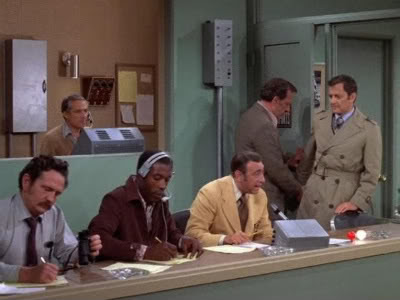
The Odd Couple utilized guest stars on several episodes. One of the most notable of these was Howard Cosell who was the most recognized sports announcer at the time. His Q score and notoriety were exploding as Monday Night Football on ABC grew in popularity. He also called many boxing matches and did segments for Wide World of Sports.

In a bit of ABC cross-promotion, Cosell made two appearances on the sitcom, both times portraying himself. As an aside, is there any TV personality in history more suited to playing himself/herself than Cosell? I would think not.

His first appearance came in a 1972 episode appropriately titled Big Mouth. In this show, Felix has landed a photography job for a cola advertisement spot featuring Cosell. The script contains several verbal clashes between Cosell and Oscar which played on the real-life disdain that Cosell and the New York Daily News sportswriter Dick Young demonstrated toward each other at that time.

The first part of the episode illustrates a typical exchange between Felix and Oscar. I especially like the way Felix exclaims "You took a cab to come here to borrow money?" As soon as Cosell enters, he and Oscar immediately start trading insults. Next, we have a super scene where Felix is ranting at Oscar who is at the typewriter working on a column which blasts Cosell. And note the way he "files" the article with Myrna.


The next clip includes a memorable "handshake" between Oscar and Cosell. Then there is the classic sinus and nasal twang routine resulting in Cosell calling Felix an "inane drone". Later, the script calls for Cosell to show off by rapidly rattling off the entire Colts defensive lineup from memory.


The final segment begins with Oscar learning that despite his request to pull the column, Myrna convinced the editor to run it. During the photo shoot, Cosell sees the article and storms out of the studio. In a broadcast scene, Cosell introduces Charlie - winner of the (classically titled) "Why I Want to Be Like Howard Cosell" contest. Cosell then tries to embarrass Oscar by putting him live on the air without warning. Oscar remains silent, overcome with stagefright, but Felix takes the microphone and jumps in with some elegant and longwinded play-by-play to bail out his best friend.

One more point of interest - According to a book by Mark Ribowsky, the lengthy departing remark from 8:09-8:36 mark on this clip was actually written by Cosell.


Cosell made a return appearance on The Odd Couple in the 1975 episode Your Mother Wears Army Boots. ABC executive producer Roone Arledge also played himself in that show as did opera singer Martina Arroyo. That episode also used the Monday Night Football angle with ABC hiring Oscar as a temporary fill-in for Alex Karras in the booth.

For a "non-actor", I feel that Cosell demonstrated rather impressive acting skills on these shows and added greatly to the entertainment. He sounded authentic with his distinctive and deliberate vocal pattern. The writers gave him many great lines, but Cosell was willing to play a caricature of himself and was quite successful in doing so. At various points in the 1972 show, Cosell describes himself as "the big man", "the great one", "the gifted one", "the single most identifiable voice in all broadcasting", and refers to "my own special talents". In the 1975 episode, he brazenly refers to Monday Night Football as "my show".

The production was surprisingly shoddy regarding the football games Cosell was broadcasting. The 1972 episode covers two Giants games and both times the displayed footage contains artificial turf. The show implies that the first game was in New York and specifically describes the second game as being at Yankee Stadium, but it had natural grass. The Giants didn't play home games on artificial turf until 1976. Charlie calls a play as ending at the 49-yard line, but the footage shows a tackle around the 30-yard line. On the play Felix calls, he describes Roger Staubach being stopped for no gain, but the footage shows Duane Thomas being tackled. In the 1975 episode, Cosell describes a 19-yard pass by Joe Namath, but the footage shows the play covering only 11 yards. Finally, both episodes portray Cosell as an NFL play-by-play announcer rather than the unique "third man in the booth" role he actually filled on the ABC games.

Other guest stars with sports ties who played themselves on this series included Deacon Jones, Bubba Smith, Bobby Riggs, and Billie Jean King. Some additional celebrities who did likewise: Bob Hope, Dick Clark, Betty White, Richard Dawson, Hugh Hefner, and Wolfman Jack along with game show hosts Allen Ludden (Password) and Monty Hall (Let's Make a Deal).

Randall and Klugman each had long and successful acting careers, but both were best known for their roles on The Odd Couple as evidenced by virtually any obituary or tribute written for either one. Klugman won the Emmy Award for Outstanding Lead Actor in a Comedy Series in both 1971 and 1973 for his role as Oscar while Randall took the same honor in 1975 for his role as Felix. During the entire 5-season run of the series, both Randall and Klugman were among the handful of nominees for this award every year.

In addition to the Me-TV networkThe Odd Couple is also currently available on the Cloo TV network and many clips from the series appear on Youtube.

This post is part of Me-TV's Summer of Classic TV Blogathon hosted by the Classic TV Blog Association. Go to http://classic-tv-blog-assoc.blogspot.com/ to view more posts in this blogathon. You can also go to http://metvnetwork.com/ to learn more about Me-TV and view its summer line-up of classic TV shows.

Monday, July 15, 2013

History of British Open on US TV (1962-present)

The British Open (more properly titled The Open Championship) is the oldest golf major, but has the shortest history on US TV. However, by 2010, the tournament with the distinctive yellow scoreboards was getting the most network TV coverage in the US of any golf major.

For many years the networks holding the US TV rights would televise the tournament primarily using video feeds from the British Broadcasting Company (BBC). For the entire decade of the 1970s, all US TV coverage was on tape delay. The Open also lagged far behind the other majors in moving to HDTV broadcasts.

For detailed TV schedules and announcers by year, see my complete research on British Open TV history over at 506sports (free registration required to view).

<EDITED on 7/17/2019 to bring this up to date as of the 2019 tournament>  

Chronology of British Open TV coverage

1961 - ABC had planned to provide taped coverage of the Friday 7/14 final round on Wide World of Sports the next day, but ABC scrapped those plans when the Friday action was rained out. At the time, the British Open was scheduled as a 3-day event ending with 36 holes on Friday. The 36-hole finish took place on Saturday with no US TV coverage.

1962 - ABC provided taped coverage of the Friday action on a Sunday edition of Wide World of Sports with Jim McKay narrating. ABC would do the same but on a next-day basis on Saturdays from 1963-1965.

1966 - The Open changed to a 4-day format with the final round on Saturday. For the first time, ABC televised the event live. The network provided 1.5 hours of coverage via Early Bird satellite of the Saturday round with McKay and Byron Nelson calling the action.

1968 - Chris Schenkel worked alongside Nelson for the telecast which covered the final 4 holes.

1969 - ABC increased to 3 hours of live coverage. This was the first time the Open was televised in color in the US.

1970 - After 4 consecutive years of live telecasts, ABC regressed to late afternoon tape delay coverage of the Saturday final round and would continue this throughout the 1970s. ABC also reduced its coverage to 1.5 hours. Dave Marr joined the ABC crew. On Sunday, ABC added tape delayed coverage of the 18-hole playoff.

1972- ABC expanded the tape delayed coverage to 2 hours and this would remain the case through 1979.

1975 - ABC added coverage of the Sunday 18-hole playoff on tape delay. ABC started using Peter Alliss from the BBC on the Open. Alliss would split time on the BBC and US TV networks on Open coverage every year through 2015.

1980 - The Open shifted to the modern Thursday-Sunday schedule. On Saturday, ABC carried 1 hour on tape delay, but the network provided 2 hours of live coverage on Sunday. This was the first live coverage of the event on ABC since 1969.

1981 - ABC provided 1.5 hours of live coverage on Saturday for a weekend total of 3.5 hours.

1982 - ESPN provided 11 hours of coverage of the Thursday and Friday rounds. Jim Simpson and Lou Palmer were among the announcers during the early years of the ESPN coverage. ABC increased to 2 hours on Saturday. Jack Whitaker joined the ABC team.

1984 - McKay did not work the Open as ABC kept him in the US to prepare for the upcoming Los Angeles Olympics. Whitaker anchored the ABC telecasts. ABC increased the Sunday coverage to 3 hours.

1988 - Due to heavy rain, the final round was delayed until Monday. ABC added 1.5 hours of tape delayed coverage of the Monday finish.

1990 - ABC expanded to 4 hours each day on the weekend. Roger Twibell anchored the ABC coverage.

1992 - Brent Musburger took over as the ABC lead announcer with Steve Melnyk as lead analyst.

1993 - Peter Jacobsen worked as lead analyst for ABC, but Melnyk would resume this role again the following year.

1997 - Mike Tirico took over as the ABC lead announcer.

1998 - ABC installed Curtis Strange as its lead analyst.

1999 - ABC moved the Saturday coverage to ESPN around 11:30am so that ABC News could follow the search for the missing plane of John F. Kennedy Jr.

2000 - ABC increased to 4.5 hours on each weekend day.

2001 - ABC expanded to 5.5 hours on both Saturday and Sunday and would continue this schedule through 2009.

2003 - TNT took over the Thursday and Friday rounds. Ernie Johnson and Bobby Clampett anchored the TNT coverage which also used some of the ABC announcers. TNT also started providing 2 hours of early morning coverage on both weekend days prior to the ABC air-time.

2004 - ABC installed Ian Baker-Finch and Nick Faldo as co-#1 analysts.

2005 - Paul Azinger joined Faldo as ABC co-lead analyst. Faldo made the cut in the event and joined the ABC coverage after finishing play.

2006 - Tirico filled in on TNT for Johnson who was undergoing chemotherapy.

2008 - ABC added Tom Watson to its TV team after Faldo left for CBS. Watson played in the event, but missed the cut. Baker-Finch took over as lead analyst on TNT.

2009 - Watson had again been scheduled to join the ABC weekend telecasts. However, he never made it to the broadcast booth as he not only made the cut, but nearly won the tournament.

2010 - ESPN took over the entire tournament. This marked the first time that a men's golf major was exclusively on cable in the US. ESPN began the Thursday and Friday coverage at 4am ET and stayed on the air for a scheduled 11 live hours both days. Tirico and Azinger remained as the lead announcers. This was also the first British Open televised in HDTV.

2014 - ESPN shifted its Saturday coverage to start at 5am ET after the tournament moved tee times earlier due to an ominous weather forecast.

2015 - ESPN started the Saturday coverage at 2am ET to show completion of the second round (but that was soon halted for wind). The third round was moved to Sunday. ESPN added Monday coverage of the final round.

2016 - NBC took over the rights and combined with Golf Channel for 49.5 hours of scheduled live coverage - a record to date for any golf major. This marks the first major for GC which came on the air at 1:30 am ET on Thursday and Friday for a total of 14.5 scheduled hours both days. Dan Hicks and Johnny Miller anchored the NBC telecasts.

2019 - Paul Azinger takes over the NBC lead analyst role replacing the retired Johnny Miller. 


Total scheduled US TV time for the British Open by year

Note: I am not including added coverage (such as playoffs) in these numbers, but I did mention these cases in the above chronology. I am also not including taped highlight shows, but am including original tape delay coverage. The hours represent live coverage except where noted.

1962-1965:   at most 1.5 hours (ABC) - covered on tape as part of Wide World of Sports
1966-1968:   1.5 hours (ABC)
1969:             3 hours (ABC)
1970-1971:  1.5 hours on tape delay (ABC)
1972-1979:  2 hours on tape delay (ABC)
1980:            3 hours total with 1 on tape delay and 2 live (ABC)
1981:             3.5 hours (ABC)
1982:             15 hours (11 on ESPN, 4 on ABC)
1983              14 hours (10 on ESPN, 4 on ABC)
1984-1989:   15 hours (10 on ESPN, 5 on ABC)
1990-1999:   18 hours (10 on ESPN, 8 on ABC)
2000:             21 hours (12 on ESPN, 9 on ABC)
2001-2002:   23 hours (12 on ESPN, 11 on ABC)
2003-2004:   30 hours (19 on TNT, 11 on ABC)
2005-2006:   31 hours (20 on TNT, 11 on ABC)
2007-2009:   30 hours (19 on TNT, 11 on ABC)
2010-2011:    37 hours (ESPN)
2012:              36 hours (ESPN)
2013-2015:    37 hours (ESPN)
2016:             49.5 hours (35 on GC, 14.5 on NBC)
2017:             49.5 hours (34.5 on GC, 15 on NBC)
2018:             49 hours (34 on GC, 15 on NBC)
2019:             48 hours (33 on GC, 15 on NBC)