The network which has the late Sunday afternoon window on NFL Divisional Playoff weekend almost always sends its #1 announcer crew to that game. This time slot traditionally obtains the highest ratings of any NFL playoff weekend and networks typically assign their top broadcast team to the game expected to draw the best TV rating.
However, this weekend, Fox has the late Sunday slot (Eagles-Saints), but is not using its #1 team of Joe Buck and Troy Aikman on that game. Instead, Fox is sending its #2 announcer team of Kevin Burkhardt and Charles Davis to New Orleans. Fox is using Buck and Aikman on the Saturday prime time Cowboys-Rams game despite the fact that Eagles-Saints will almost certainly garner a much higher rating due to its favorable time slot.
The last time a network which had the late Sunday afternoon window chose to send its top announcers to a different divisional playoff game was during the 1980 playoffs when CBS sent its #1 team of Pat Summerall and Tom Brookshier to call the early Saturday Vikings-Eagles game and assigned the #2 crew of Vin Scully and George Allen to the late Sunday Cowboys-Falcons matchup.
So the Fox announcer assignments for this weekend represent a situation that hasn't happened in 38 years - and has only occurred three previous times since the 1970 merger.
Here is a summary of the rare cases where a network which had the late Sunday divisional playoff window sent its #1 announcer crew to a different game (all years refer to the NFL season, even when the playoff games were played in January):
2018 - Fox - described above
1980 - CBS - described above
1978 - CBS - #1 team of Summerall and Brookshier called Falcons-Cowboys (late Saturday)
#2 team of Scully, Allen, and Jim Brown called Vikings-Rams (late Sunday)
1972 - NBC - #1 team of Curt Gowdy and Al Derogatis called Raiders-Steelers "immaculate reception" (early Saturday)
#2 team of Jim Simpson and Kyle Rote called Browns-Dolphins (late Sunday)
Showing posts with label NFL. Show all posts
Showing posts with label NFL. Show all posts
Thursday, January 10, 2019

Wednesday, November 1, 2017
The myth about the Fair Hooker comment attributed to Don Meredith
In 1970, ABC introduced Monday Night Football and placed the colorful Don Meredith in the booth alongside Keith Jackson and Howard Cosell. Meredith became known for his irreverent style and classic one-liners. Perhaps the most famous quote attributed to Meredith took place in the debut regular season edition of this prime time series. Late in the second quarter of that telecast, Meredith commented about the intriguing name of Browns wide receiver Fair Hooker. According to a frequently cited legend, Dandy Don uttered a follow-up remark along the lines of "I haven't met one yet."
I've long wondered how this commentary sounded on-air (more on that later). First, let's take a look at several versions of this tale which have appeared in print.
Meredith died in 2010 and his obituary in the New York Times contained this statement:
The 1988 book Monday Night Mayhem, a detailed history of ABC's Monday Night Football, offered this version:
And that was the extent of it. No follow-up remark of "I haven't met one yet" or anything resembling it. I wondered whether Meredith may have made that kind of statement later in the telecast. But I listened to the remainder of the video and found no such comment.
So where did this famous story come from? I have no idea. I suppose that once it appeared in print, other publications assumed it was true without attempting to verify it and simply ran with it. But that doesn't explain how it got printed that way in the first place. Perhaps Meredith was later interviewed about his "great name" comment and added the "haven't met one yet" quip at that time.
It seems that this often quoted Meredith line was really too good to be true.
I've long wondered how this commentary sounded on-air (more on that later). First, let's take a look at several versions of this tale which have appeared in print.
Meredith died in 2010 and his obituary in the New York Times contained this statement:
Mr. Meredith offered a taste of his breezy, even risqué, humor in that first broadcast. In talking about the Cleveland Browns receiver Fair Hooker, Mr. Meredith said, “Fair Hooker — I haven’t met one yet.”
Upon Meredith's passing, the Milwaukee Journal-Sentinel recounted the story this way:
Perhaps the greatest line of them all came in the first Monday night game between the New York Jets and the Cleveland Browns.
Cleveland receiver Fair Hooker had just caught a pass, which really got Meredith going.
"Isn't Fair Hooker a great name?" he asked.
Keith Jackson said nothing and for once Cosell was speechless.
Meredith then added, "Fair Hooker . . . I haven't met one yet."
Or the time he said of Fair Hooker (the Cleveland wide receiver), "Now there's a name. Fair Hooker. I ain't never met one yet."
The 1988 book Monday Night Mayhem, a detailed history of ABC's Monday Night Football, offered this version:
"Isn't Fair Hooker a great name?" Meredith asked, with the implications hanging.
"I pass," Jackson said.
Cosell, perhaps reluctant to hear what might come next, said nothing.
Meredith went on anyway. "Fair Hooker", he mused. "I haven't met one yet."
Obviously some of the details on the exact wording and the reactions of Jackson and Cosell are inconsistent in these renditions. But the essence of the story is that during this Jets-Browns telecast, Meredith commented about the name Fair Hooker and then followed up with a classic line about never having met one. And numerous other newspapers, magazines, and books over the years have described the incident along those lines. However, there is one major problem with this tale. The famous alleged on-air follow-up statement never happened!
A full copy of this 9/21/70 telecast recently surfaced on YouTube. I located the exchange in question starting around the 1:23:21 mark as Meredith analyzes the previous play:
Meredith: Isn't Fair Hooker a great name?
Cosell: <after a slight pause> I pass.
Jackson: 3rd down and about 42 yards to go
And that was the extent of it. No follow-up remark of "I haven't met one yet" or anything resembling it. I wondered whether Meredith may have made that kind of statement later in the telecast. But I listened to the remainder of the video and found no such comment.
So where did this famous story come from? I have no idea. I suppose that once it appeared in print, other publications assumed it was true without attempting to verify it and simply ran with it. But that doesn't explain how it got printed that way in the first place. Perhaps Meredith was later interviewed about his "great name" comment and added the "haven't met one yet" quip at that time.
It seems that this often quoted Meredith line was really too good to be true.
Thursday, December 22, 2016
Rare case - Network #1 announcer team calling early game of NFL doubleheader
During the NFL regular season, Fox and CBS share the Sunday afternoon TV rights. Each week, one network gets doubleheader rights and can show both an early and late afternoon game in most markets. The other network gets rights to show just a single game to each market. Typically, the network with the doubleheader features its most attractive game in the late afternoon (4:25 pm ET) time slot and usually assigns its top announcer team to that game.
Because Christmas Day is on Sunday this year, the NFL moved the bulk of its schedule to Saturday for week 16. This weekend, Fox has the NFL doubleheader TV rights, but is sending its #1 team of Joe Buck and Troy Aikman to call Vikings-Packers at 1pm ET instead of a 4:25 game. How rare is such an assignment? This is only the fourth time since 2004 that a network sent its top announcer crew to an early afternoon game on a day when that network owned the doubleheader rights.
Here are the only such instances in the past 12 seasons where the top team on the doubleheader network called a game in the early window:
So the 2008 instance is the actually the only time since 2004 that a network holding exclusive doubleheader rights put its top team on an early game. For comparison, I found 23 cases of this between 1994 and 2004, so the relative rarity in recent years helps illustrate how important the late afternoon doubleheader window has become to the TV networks.
Another interesting aspect about the upcoming weekend is that CBS is sending its #1 team of Nantz/Simms to call a late afternoon game (Colts-Raiders) despite the fact that CBS has the singleheader. The 4:05 games tend to get limited regional distribution as they are aired against the featured 4:25 contest, so generally, the top crew gets assigned to an early game on a singleheader weekend.
But how unusual is this combination? Only twice since the 1998 season has the DH network assigned its top team to an early game while the singleheader network put its #1 crew on a late game that same day.
Because Christmas Day is on Sunday this year, the NFL moved the bulk of its schedule to Saturday for week 16. This weekend, Fox has the NFL doubleheader TV rights, but is sending its #1 team of Joe Buck and Troy Aikman to call Vikings-Packers at 1pm ET instead of a 4:25 game. How rare is such an assignment? This is only the fourth time since 2004 that a network sent its top announcer crew to an early afternoon game on a day when that network owned the doubleheader rights.
Here are the only such instances in the past 12 seasons where the top team on the doubleheader network called a game in the early window:
- 2013 week 17 - CBS placed Jim Nantz and Phil Simms on Ravens-Bengals in the early window. Note: Since 2006, the NFL has allowed both CBS and Fox to televise a doubleheader on the final Sunday of the regular season. So the week 17 late doubleheader window is not exclusive to one network like it is for a typical NFL Sunday.
- 2011 week 17 - Fox assigned Buck and Aikman to Panthers-Saints at 1:00.
- 2008 week 12 - Fox sent Buck and Aikman to call 49ers-Cowboys in the early slot despite having rights to the late doubleheader slot (then at 4:15).
So the 2008 instance is the actually the only time since 2004 that a network holding exclusive doubleheader rights put its top team on an early game. For comparison, I found 23 cases of this between 1994 and 2004, so the relative rarity in recent years helps illustrate how important the late afternoon doubleheader window has become to the TV networks.
Another interesting aspect about the upcoming weekend is that CBS is sending its #1 team of Nantz/Simms to call a late afternoon game (Colts-Raiders) despite the fact that CBS has the singleheader. The 4:05 games tend to get limited regional distribution as they are aired against the featured 4:25 contest, so generally, the top crew gets assigned to an early game on a singleheader weekend.
But how unusual is this combination? Only twice since the 1998 season has the DH network assigned its top team to an early game while the singleheader network put its #1 crew on a late game that same day.
- 2004 week 14 - Fox had the doubleheader but sent Buck and Aikman to call Seahawks-Vikings while CBS placed Nantz and Simms on a late singleheader game (Jets-Steelers)
- 2002 week 11 - On this CBS doubleheader day, the #1 team of Greg Gumbel and Simms handled Bills-Chiefs early while Fox assigned its top team of Buck, Aikman, and Cris Collinsworth to call 49ers-Chargers in the late singleheader window.
For completeness, I found four other cases of this odd combination between 1994 and 1998.
Monday, February 15, 2016
History of TV scheduling for Super Bowl rematches
In the 2016 regular season, the Denver Broncos will host the Carolina Panthers in a rematch of Super Bowl 50. This marks only the 7th time that a regular season rematch of the prior Super Bowl has occurred. The NFL schedule will be revealed this spring and presumably this rematch will get prominent TV placement.
But this leads to a few questions... Where has the NFL placed the previous Super Bowl rematches on its TV schedule? How frequently have such rematches been aired in prime time?
Here is a summary of how the previous six Super Bowl rematches were scheduled for TV purposes (all times ET):
 In the first year after merging with the AFL to form a 26-team league, the NFL kicked off its 1970 regular season with a rematch of Super Bowl 4 as the Chiefs and Vikings squared off in Minnesota. NBC assigned its top crew of Curt Gowdy and Kyle Rote to this matchup which was the featured 4 pm doubleheader game on opening Sunday.
The next such game was a Super Bowl 11 rematch between the Vikings and Raiders in Oakland during week 13 of 1977. This game was the primary 4 pm Sunday doubleheader game on CBS with Vin Scully and Alex Hawkins in the booth. This is the only time a Super Bowl rematch was not covered by the top broadcasting crew of the network airing the game. CBS sent its #1 team of Pat Summerall and Tom Brookshier to call a Saturday game that weekend. At that time, CBS and NBC aired national Saturday afternoon games late in the season.
Two years later, the Cowboys faced the Steelers in Pittsburgh in a rematch of Super Bowl 13. The game was in week 9 on CBS which had the doubleheader that day. However, the NFL scheduled this game at 1 pm making it the only rematch played in the early Sunday afternoon window. CBS did assign Summerall and Brookshier to handle that telecast in a rare case where the #1 crew called an early game when its network had the doubleheader.
In week 2 of 1993, the Cowboys hosted the Bills in a rematch of Super Bowl 27. NBC featured it as the main 4 pm doubleheader game with its #1 team of Dick Enberg and Bob Trumpy on the call. So far, this is the only rematch on the same network that had televised the prior Super Bowl. Enberg and Trumpy were in the booth for that game as well.
The NFL scheduled the Super Bowl 31 rematch between the Packers and Patriots in Foxboro for Monday Night Football in week 9 of 1997. Al Michaels, Frank Gifford, and Dan Dierdorf had the announcing duties that night on ABC at 9 pm. In an odd twist, a stadium conflict with the Florida Marlins (who hosted World Series game 7 on Sunday) caused the NFL to move the Bears-Dolphins game from Sunday afternoon to Monday night. That game started also started at 9 pm and ABC televised it to Chicago and Miami. So while Packers-Patriots is the only Super Bowl rematch thus far to be played in prime time, it wasn't televised to the entire country.
The most recent game on this list took place in week 3 of 2014 when the Broncos traveled to Seattle to face the Seahawks in a rematch of Super Bowl 48 - some 17 years after the last rematch. CBS assigned its #1 crew of Jim Nantz and Phil Simms to this contest and spotlighted it as the main 4:25 pm doubleheader game.
But this leads to a few questions... Where has the NFL placed the previous Super Bowl rematches on its TV schedule? How frequently have such rematches been aired in prime time?
Here is a summary of how the previous six Super Bowl rematches were scheduled for TV purposes (all times ET):
1970

1977
The next such game was a Super Bowl 11 rematch between the Vikings and Raiders in Oakland during week 13 of 1977. This game was the primary 4 pm Sunday doubleheader game on CBS with Vin Scully and Alex Hawkins in the booth. This is the only time a Super Bowl rematch was not covered by the top broadcasting crew of the network airing the game. CBS sent its #1 team of Pat Summerall and Tom Brookshier to call a Saturday game that weekend. At that time, CBS and NBC aired national Saturday afternoon games late in the season.
1979
Two years later, the Cowboys faced the Steelers in Pittsburgh in a rematch of Super Bowl 13. The game was in week 9 on CBS which had the doubleheader that day. However, the NFL scheduled this game at 1 pm making it the only rematch played in the early Sunday afternoon window. CBS did assign Summerall and Brookshier to handle that telecast in a rare case where the #1 crew called an early game when its network had the doubleheader.
1993
In week 2 of 1993, the Cowboys hosted the Bills in a rematch of Super Bowl 27. NBC featured it as the main 4 pm doubleheader game with its #1 team of Dick Enberg and Bob Trumpy on the call. So far, this is the only rematch on the same network that had televised the prior Super Bowl. Enberg and Trumpy were in the booth for that game as well.
1997
The NFL scheduled the Super Bowl 31 rematch between the Packers and Patriots in Foxboro for Monday Night Football in week 9 of 1997. Al Michaels, Frank Gifford, and Dan Dierdorf had the announcing duties that night on ABC at 9 pm. In an odd twist, a stadium conflict with the Florida Marlins (who hosted World Series game 7 on Sunday) caused the NFL to move the Bears-Dolphins game from Sunday afternoon to Monday night. That game started also started at 9 pm and ABC televised it to Chicago and Miami. So while Packers-Patriots is the only Super Bowl rematch thus far to be played in prime time, it wasn't televised to the entire country.
2014
The most recent game on this list took place in week 3 of 2014 when the Broncos traveled to Seattle to face the Seahawks in a rematch of Super Bowl 48 - some 17 years after the last rematch. CBS assigned its #1 crew of Jim Nantz and Phil Simms to this contest and spotlighted it as the main 4:25 pm doubleheader game.
Summary notes
- Of the six Super Bowl rematches so far, four were scheduled as the primary late Sunday afternoon doubleheader game. Only one has been scheduled for prime time (Monday night) while the other game was the main early Sunday game on the doubleheader network.
- Because of the circumstances surrounding the 1997 Monday night game, none of the rematches has been a full national telecast.
- From a calendar standpoint, three games took place in September, two were scheduled in late October, and one was played in December.
- Only one rematch was not called by a network's #1 announcer crew.
- No TV announcer has called more than one Super Bowl rematch - a streak that will continue if Fox gets the 2016 matchup).
- Super Bowl rematches have been rarer than expected. Using a basic probability model and assuming random chance, I calculated that the expected number of such rematches since the 1970 merger would be 12, but the 2016 game will only be the 7th.
Sunday, January 17, 2016
Some thoughts on the NFLN "re-broadcast" of Super Bowl 1
I found the NFL Network special on Super Bowl 1 to be an enormous letdown. A few quick observations:
NFLN hyped this show as a "re-broadcast" which was a grossly misleading characterization. The term "re-broadcast" means to repeat the broadcast of a program. But this was nothing of the sort. The presentation had only a few clips from the original telecast and was primarily footage from NFL Films. While the show did contain original radio clips, a large percentage of that audio was drowned out by the cast on the NFLN set.
<UPDATE 1/18/2016 - NFL Network now plans to re-air the Super Bowl 1 assembled footage, but this time with the original uninterrupted radio audio on Friday 1/22 at 8pm ET.>
The most positive aspect of the show was the inclusion of the original CBS footage of Ray Scott doing some pregame player introductions and Pat Summerall conducting a postgame interview. But the NFLN program didn't mention that these were original CBS TV clips, never identified Scott, and had the studio crew talking over parts of the Scott footage.
The seemingly constant banter from the studio panel ran concurrent with a dampened version of the radio audio in the background. This setup was extremely distracting and seemed disrespectful to radio play-by-play announcer Jim Simpson. With a 3-hour show, NFLN could have easily utilized its commentators between segments of game footage.
I cannot imagine that either Ed Sabol or Steve Sabol would have been pleased with this NFLN presentation.
During the show, host Chris Rose discussed the fact that neither CBS nor NBC saved a copy of its original telecast. But that segment completely ignored the fact that a tape containing most of the CBS telecast was discovered in 2005 and restored by the Paley Center. That tape even contains original commercials (which one of the panelists expressed an interest in seeing).
Not surprisingly, the reaction from viewers was overwhelmingly negative. I don't recall seeing a single positive tweet about this show either during or after it aired. I honestly don't know what NFLN was thinking with this production or how anyone in charge at the network could have expected praise for it.
Prior to the airing, an NFLN producer amazingly uttered the following quote in a New York Times preview story:
NFLN hyped this show as a "re-broadcast" which was a grossly misleading characterization. The term "re-broadcast" means to repeat the broadcast of a program. But this was nothing of the sort. The presentation had only a few clips from the original telecast and was primarily footage from NFL Films. While the show did contain original radio clips, a large percentage of that audio was drowned out by the cast on the NFLN set.
<UPDATE 1/18/2016 - NFL Network now plans to re-air the Super Bowl 1 assembled footage, but this time with the original uninterrupted radio audio on Friday 1/22 at 8pm ET.>
The most positive aspect of the show was the inclusion of the original CBS footage of Ray Scott doing some pregame player introductions and Pat Summerall conducting a postgame interview. But the NFLN program didn't mention that these were original CBS TV clips, never identified Scott, and had the studio crew talking over parts of the Scott footage.
The seemingly constant banter from the studio panel ran concurrent with a dampened version of the radio audio in the background. This setup was extremely distracting and seemed disrespectful to radio play-by-play announcer Jim Simpson. With a 3-hour show, NFLN could have easily utilized its commentators between segments of game footage.
I cannot imagine that either Ed Sabol or Steve Sabol would have been pleased with this NFLN presentation.
During the show, host Chris Rose discussed the fact that neither CBS nor NBC saved a copy of its original telecast. But that segment completely ignored the fact that a tape containing most of the CBS telecast was discovered in 2005 and restored by the Paley Center. That tape even contains original commercials (which one of the panelists expressed an interest in seeing).
Not surprisingly, the reaction from viewers was overwhelmingly negative. I don't recall seeing a single positive tweet about this show either during or after it aired. I honestly don't know what NFLN was thinking with this production or how anyone in charge at the network could have expected praise for it.
“We’ll make sure we don’t ruin anything with the chatter,” Larone said. “If we have the right people together, it will be like a viewing party.”The first half of that quote is a complete insult to everyone who viewed this disappointing special. NFL Network spoiled the party.
Tuesday, January 5, 2016
NFLN to "re-broadcast" Super Bowl 1 on Jan 15
<UPDATED 1/10/2016 - A story in the NY Times confirms that this "re-broadcast" will consist of NFL Films footage and the original radio call rather than the discovered tape of the original CBS telecast.>
According to online listings, NFL Network plans to "re-broadcast" the original Super Bowl on Friday 1/15 at 8pm ET. While I have seen no press release providing any details, here is the entry on the NFLN online schedule for this 2-hour program:
while the DirecTV program guide describes it as follows:
Both listings incorrectly call this the "50th anniversary". 2016 actually marks the 49th anniversary of the January 15, 1967 game.
The use of the terms "re-broadcast" and "Lost Game" along with the claim of "never before seen footage" suggest that this airing might include (at least in part) the discovered tape of the original CBS telecast which was restored by the Paley Center, but which has never been available to the public. If that is indeed the case, this should be an awesome presentation, but I have seen nothing to confirm this. On the other hand, the reference to NFL Films might mean that this production will be similar to what ESPN did for the 1958 NFL Championship game back in 2008 where they intermixed film footage with modern interviews and essentially created a simulated re-broadcast.
Either way, I am surprised to see this program show up on the various guides without any press release from NFL Network. Another oddity is that as of last night, these schedules were listing this program as lasting 3 hours instead of 2.
According to online listings, NFL Network plans to "re-broadcast" the original Super Bowl on Friday 1/15 at 8pm ET. While I have seen no press release providing any details, here is the entry on the NFLN online schedule for this 2-hour program:
"Super Bowl I Re-Broadcast Event" - NFL Films presents the first ever re-broadcast of Super Bowl I on the 50th Anniversary of the game. Featuring special guests and never before seen footage, see the game that started it all when the Kansas City Chiefs of the AFL squared off against the Green Bay Packers of the NFL.
while the DirecTV program guide describes it as follows:
Super Bowl I - The Lost Game
The re-broadcast of the game that started it all on the 50th Anniversary of the game featuring Kansas City Chiefs of the AFL against the Green Bay Packers of the NFL.
Both listings incorrectly call this the "50th anniversary". 2016 actually marks the 49th anniversary of the January 15, 1967 game.
The use of the terms "re-broadcast" and "Lost Game" along with the claim of "never before seen footage" suggest that this airing might include (at least in part) the discovered tape of the original CBS telecast which was restored by the Paley Center, but which has never been available to the public. If that is indeed the case, this should be an awesome presentation, but I have seen nothing to confirm this. On the other hand, the reference to NFL Films might mean that this production will be similar to what ESPN did for the 1958 NFL Championship game back in 2008 where they intermixed film footage with modern interviews and essentially created a simulated re-broadcast.
Either way, I am surprised to see this program show up on the various guides without any press release from NFL Network. Another oddity is that as of last night, these schedules were listing this program as lasting 3 hours instead of 2.
Monday, March 30, 2015
NFLN to debut 5 new episodes on historic NFL drafts
 One of the best aspects of NFL Network is its focus on documentaries. Last year, the network launched a fascinating series Caught in the Draft which spotlighted the 1964 draft on the 50th anniversary and followed up with episodes covering the 1974, 1984, 1994, and 2004 drafts. This week marks the return of that concept as NFLN will profile the drafts for each year ending in "5" from 1965-2005.
The new season debuts on Thursday April 2 at 9 pm ET with an episode on the 1965 draft and the intriguing battle between the NFL and AFL for new talent. The series continues with new episodes in that same timeslot for five consecutive weeks with several replays scheduled. Leading into the season premiere, NFLN will re-air the 1964 episode on 4/2 at 8 pm ET and that pattern will continue each week which is great news for anyone who missed any of the showings from last year.
This promises to be another excellent series produced by NFL Films. Check out the trailer for the 1965 episode.
Saturday, January 24, 2015
Error in ESPN documentary on Max McGee TD in Super Bowl 1
ESPN aired an impressive documentary last night which spotlighted the four photographers who have worked each Super Bowl to date. The program Keepers of the Streak provided great stories from photographers John Biever, Walter Iooss, Mickey Palmer, and Tony Tomsic on their experiences in covering this event and the massive changes they have seen in media coverage, access, and logistics since the early years and how technology has changed their profession.
 Surprisingly, this otherwise excellent episode contained a blunder regarding the first Super Bowl. Around the 9 minute mark, the show covers the halftime scene from Super Bowl 1. After that, the discussion turns to how the Packers began to pull away from the Chiefs in the second half on a 37 yard touchdown pass to Max McGee. This segment which is accompanied by NFL Films footage of that TD leads into the story of how an end zone photo taken by Iooss from that play become the cover image for the next edition of Sports Illustrated.
One problem: The McGee 37 yard TD which was the subject of the SI cover photo occurred in the first quarter of that game putting Green Bay up 7-0, not in the second half. McGee did score another TD of 13 yards late in the third, but the video footage on the documentary during the narration of this alleged third quarter sequence was definitely from the first quarter TD pass.
I highly recommend this documentary for the great storytelling and iconic photos. If you missed the show, ABC will replay it at noon ET on Sat 1/24 while ESPN2 has a scheduled re-airing at 7 pm ET on Thu 1/29.
Surprisingly, this otherwise excellent episode contained a blunder regarding the first Super Bowl. Around the 9 minute mark, the show covers the halftime scene from Super Bowl 1. After that, the discussion turns to how the Packers began to pull away from the Chiefs in the second half on a 37 yard touchdown pass to Max McGee. This segment which is accompanied by NFL Films footage of that TD leads into the story of how an end zone photo taken by Iooss from that play become the cover image for the next edition of Sports Illustrated.One problem: The McGee 37 yard TD which was the subject of the SI cover photo occurred in the first quarter of that game putting Green Bay up 7-0, not in the second half. McGee did score another TD of 13 yards late in the third, but the video footage on the documentary during the narration of this alleged third quarter sequence was definitely from the first quarter TD pass.
I highly recommend this documentary for the great storytelling and iconic photos. If you missed the show, ABC will replay it at noon ET on Sat 1/24 while ESPN2 has a scheduled re-airing at 7 pm ET on Thu 1/29.
Wednesday, December 17, 2014
The last untelevised NFL regular season game (1975)
Today, it would be unthinkable for an NFL game to not be televised. So when was the last time an NFL regular season game did not appear on TV at all? According to the historical NFL TV research at 506sports, the answer is 1975 (when it happened twice).
The last untelevised NFL game was on Saturday 11/1/1975 when the Giants hosted the Chargers at 1 pm. Why was there an NFL game on a mid-season Saturday? The Giants shared Shea Stadium with the Jets that year as their new stadium in the Meadowlands was under construction. Shea was unavailable to the NFL until the MLB season ended as the Mets were the primary tenant. This forced the Giants and Jets to play on the road the first two weeks of the season. To squeeze in 14 home games at Shea over 12 weeks, the NFL scheduled the Giants for a few Saturday home dates. For games like this played outside of the normal network TV windows, the NFL allowed the road team to sell the TV rights to a local station (same thing for the home team if the game was a sellout). But no local station opted to pick up this game so it was not on TV.
So when was the last Sunday afternoon NFL game which went untelevised? That occurred just a few weeks earlier when the Patriots played at Cincinnati on Sunday 10/12/1975 at 1 pm. Why did TV shun that game? Well, NBC aired game 2 of the Cincinnati-Boston World Series that day at 1 pm. The same option for teams to sell the local TV rights applied in cases like this when NBC carried a Sunday baseball postseason game, All of the early afternoon NFL games bumped from NBC that day were televised by a local station except for NE-Cin. With the World Series featuring teams from the same TV markets, no local station wanted to televise it and compete with baseball. The idea that baseball would render an NFL game to not be televised seems hard to believe now, but it happened in 1975.
The last untelevised NFL game was on Saturday 11/1/1975 when the Giants hosted the Chargers at 1 pm. Why was there an NFL game on a mid-season Saturday? The Giants shared Shea Stadium with the Jets that year as their new stadium in the Meadowlands was under construction. Shea was unavailable to the NFL until the MLB season ended as the Mets were the primary tenant. This forced the Giants and Jets to play on the road the first two weeks of the season. To squeeze in 14 home games at Shea over 12 weeks, the NFL scheduled the Giants for a few Saturday home dates. For games like this played outside of the normal network TV windows, the NFL allowed the road team to sell the TV rights to a local station (same thing for the home team if the game was a sellout). But no local station opted to pick up this game so it was not on TV.
So when was the last Sunday afternoon NFL game which went untelevised? That occurred just a few weeks earlier when the Patriots played at Cincinnati on Sunday 10/12/1975 at 1 pm. Why did TV shun that game? Well, NBC aired game 2 of the Cincinnati-Boston World Series that day at 1 pm. The same option for teams to sell the local TV rights applied in cases like this when NBC carried a Sunday baseball postseason game, All of the early afternoon NFL games bumped from NBC that day were televised by a local station except for NE-Cin. With the World Series featuring teams from the same TV markets, no local station wanted to televise it and compete with baseball. The idea that baseball would render an NFL game to not be televised seems hard to believe now, but it happened in 1975.
Wednesday, November 26, 2014
Four pro football telecasts on Thanksgiving Day (1967-1969)
Thanksgiving Day football on TV has been a longstanding tradition. Since the 1970 merger, the NFL has always presented an early afternoon telecast from Detroit followed by a late afternoon game (from Dallas most years, but from St, Louis twice in 1970s). The Turkey Day telecast schedule expanded to a tripleheader in 2006 when the NFL added a prime time game on NFLN. The Thanksgiving night telecast moved to NBC starting in 2012.
But did you know that there used to be a total of four pro football telecasts on Thanksgiving Day? This was indeed the case from 1967 to 1969. During those seasons, CBS presented a pair of Turkey Day telecasts with staggered start times sandwiched around an AFL doubleheader on NBC. The four games represented a whopping 31% of the pro football schedule. During these threee seasons CBS would begin with a noon time game from Detroit. Then NBC provided a pair of AFL games starting in the early afternoon. Finally, CBS came back with a 6 pm game from Dallas. And on top of all that, ABC aired a mid-afternoon college game.
For example, here was the Thanksgiving Day TV menu on Thursday 11/27/1969 (all times ET):
Vikings @ Lions, 12:15 pm, CBS
Broncos @ Chiefs, 1:30 pm, NBC
Texas Tech vs Arkansas, 2:30 pm, ABC
Chargers @ Oilers, 4 pm, NBC
49ers @ Cowboys, 6 pm, CBS
In a notable sign of the times, NBC used a 2.5 hour window for its early game.
But did you know that there used to be a total of four pro football telecasts on Thanksgiving Day? This was indeed the case from 1967 to 1969. During those seasons, CBS presented a pair of Turkey Day telecasts with staggered start times sandwiched around an AFL doubleheader on NBC. The four games represented a whopping 31% of the pro football schedule. During these threee seasons CBS would begin with a noon time game from Detroit. Then NBC provided a pair of AFL games starting in the early afternoon. Finally, CBS came back with a 6 pm game from Dallas. And on top of all that, ABC aired a mid-afternoon college game.
For example, here was the Thanksgiving Day TV menu on Thursday 11/27/1969 (all times ET):
Vikings @ Lions, 12:15 pm, CBS
Broncos @ Chiefs, 1:30 pm, NBC
Texas Tech vs Arkansas, 2:30 pm, ABC
Chargers @ Oilers, 4 pm, NBC
49ers @ Cowboys, 6 pm, CBS
In a notable sign of the times, NBC used a 2.5 hour window for its early game.
Monday, August 4, 2014
Jim Nantz and Phil Simms poised to break an NFL TV record
<UPDATE 12/15/2014: Nantz and Simms each broke this record and reached 22 games when they called the Thursday 12/11 Cardinals-Rams game. Both are on track to set the new mark at 26 regular season games.>
Jim Nantz and Phil Simms are likely to shatter an NFL TV broadcasting record in 2014. Earlier this year, CBS acquired the rights to the new Thursday night NFL package. The network has already announced that Nantz and Simms will call the 7 Thursday night games on CBS, the 7 Thursday night games on NFL Network, and one of the Saturday games in week 16. That will put them at 15 games, but CBS also plans to use Nantz and Simms on "select" Sunday telecasts - presumably on many of the doubleheader weeks.
The expected workload for the CBS #1 crew leads into the question as to who holds the "record" in the category of most games worked in a single regular season by an NFL TV announcer. Using the historical pro football TV announcer listings at 506sports, the current record is 21 games. Frank Gifford reached this mark 4 times while OJ Simpson and Joe Namath did so once each - all for ABC.
So, if we conservatively assume that CBS assigns Nantz and Simms to a Sunday contest on 6 of the 9 CBS doubleheader weeks, then if they also work on opening Sunday and Thanksgiving Day, that would make 23 games which would easily set a new single season record. If CBS were to use them on all 8 of the "practical" doubleheader weeks (excluding week 16 due to the Saturday games), then the mark would reach 25. It will be interesting to see how this plays out.
<UPDATE 12/15/2014: Nantz and Simms will not call a week 16 Saturday game, but will work that Sunday instead, They also called a week 15 game during a CBS singleheader which, along with a week 17 game, will bring their season total to 26.>
Here is the complete list of announcers I found who called 19 or more games in a single regular season:
With the exception of Paul Maguire, all of these announcers on the 19+ list did so while working for a network which had one of the prime time packages and which carried multiple games in select weeks. NBC twice used Maguire for 2 games on Thanksgiving weekend plus a Saturday/Sunday back-to-back late in the season.
Nantz and Simms are among a group of announcers who have called 18 games in a season. In the era of the 17-week schedule, many of the announcers on the CBS and Fox #1 crews have called 18 (typically when receiving double-duty on Thanksgiving weekend). In 1993, the NFL had an 18-week schedule, but even though the #1 announcers doubled up on Turkey Day weekend, they got a week off elsewhere. Others who have maxed out at 18 include Pat Summerall, John Madden, Dick Stockton, Matt Millen, Troy Aikman, and Greg Gumbel.
Most of these marks were set when ABC had a 20-game package starting in 1978 and a 21-game package from 1983-86. Gifford called all of those games. Al Michaels missed 2 in 1986 while covering the baseball playoffs. Cris Collinsworth joined the club in 2013 when the NBC prime time package expanded to a 19-game schedule. Some other notable #1 announcers who have never reached 18 are Joe Buck (who annually misses games to cover the MLB playoffs) and Dick Enberg (who often had golf conflicts).
Jim Nantz and Phil Simms are likely to shatter an NFL TV broadcasting record in 2014. Earlier this year, CBS acquired the rights to the new Thursday night NFL package. The network has already announced that Nantz and Simms will call the 7 Thursday night games on CBS, the 7 Thursday night games on NFL Network, and one of the Saturday games in week 16. That will put them at 15 games, but CBS also plans to use Nantz and Simms on "select" Sunday telecasts - presumably on many of the doubleheader weeks.
The expected workload for the CBS #1 crew leads into the question as to who holds the "record" in the category of most games worked in a single regular season by an NFL TV announcer. Using the historical pro football TV announcer listings at 506sports, the current record is 21 games. Frank Gifford reached this mark 4 times while OJ Simpson and Joe Namath did so once each - all for ABC.
So, if we conservatively assume that CBS assigns Nantz and Simms to a Sunday contest on 6 of the 9 CBS doubleheader weeks, then if they also work on opening Sunday and Thanksgiving Day, that would make 23 games which would easily set a new single season record. If CBS were to use them on all 8 of the "practical" doubleheader weeks (excluding week 16 due to the Saturday games), then the mark would reach 25. It will be interesting to see how this plays out.
<UPDATE 12/15/2014: Nantz and Simms will not call a week 16 Saturday game, but will work that Sunday instead, They also called a week 15 game during a CBS singleheader which, along with a week 17 game, will bring their season total to 26.>
Here is the complete list of announcers I found who called 19 or more games in a single regular season:
| announcer | network | season | games |
|---|---|---|---|
| Frank Gifford | ABC | 1983 | 21 |
| Frank Gifford | ABC | 1984 | 21 |
| Frank Gifford | ABC | 1985 | 21 |
| OJ Simpson | ABC | 1985 | 21 |
| Joe Namath | ABC | 1985 | 21 |
| Frank Gifford | ABC | 1986 | 21 |
| Frank Gifford | ABC | 1978 | 20 |
| Howard Cosell | ABC | 1978 | 20 |
| Frank Gifford | ABC | 1979 | 20 |
| Frank Gifford | ABC | 1980 | 20 |
| Frank Gifford | ABC | 1981 | 20 |
| OJ Simpson | ABC | 1984 | 20 |
| Don Meredith | ABC | 1984 | 19 |
| Al Michaels | ABC | 1986 | 19 |
| Paul Maguire | NBC | 1996 | 19 |
| Paul Maguire | NBC | 1997 | 19 |
| Al Michaels | NBC | 2013 | 19 |
| Cris Collinsworth | NBC | 2013 | 19 |
Nantz and Simms are among a group of announcers who have called 18 games in a season. In the era of the 17-week schedule, many of the announcers on the CBS and Fox #1 crews have called 18 (typically when receiving double-duty on Thanksgiving weekend). In 1993, the NFL had an 18-week schedule, but even though the #1 announcers doubled up on Turkey Day weekend, they got a week off elsewhere. Others who have maxed out at 18 include Pat Summerall, John Madden, Dick Stockton, Matt Millen, Troy Aikman, and Greg Gumbel.
Most of these marks were set when ABC had a 20-game package starting in 1978 and a 21-game package from 1983-86. Gifford called all of those games. Al Michaels missed 2 in 1986 while covering the baseball playoffs. Cris Collinsworth joined the club in 2013 when the NBC prime time package expanded to a 19-game schedule. Some other notable #1 announcers who have never reached 18 are Joe Buck (who annually misses games to cover the MLB playoffs) and Dick Enberg (who often had golf conflicts).
Thursday, January 23, 2014
CBS TV audio from 1965 NFL Championship game
Have you ever wondered how an NFL Championship game sounded on TV in the pre-Super Bowl era? Check out these clips which feature original audio from the CBS telecast of the 1965 Browns-Packers NFL title game. (Note: All video footage appearing on these clips is from NFL Films.)
The TV announcers for this telecast were Ray Scott, Ken Coleman, and Frank Gifford. Scott handled the play-by-play duties for the first half of the telecast while Coleman described the action in the second half. Gifford served as the analyst throughout. These videos only cover the TV audio for the second half, so on these clips, Coleman and Gifford call the game. You can hear Scott during the postgame interview segment. During the 1965 season, CBS used designated play-by-play announcers for each team, so Scott (Packers) and Coleman (Browns) got the championship game assignment.
The CBS audio presents a fascinating (if incomplete) glimpse into the TV coverage of the time. The broadcasting style is much more subdued that what we experience today. CBS used a limited amount of the relatively new instant replay technology which Gifford refers to as "stop action" (and sometimes coming from the "end zone isolated camera")
The first video covers the 3rd quarter and starts out accompanied by the radio call of the game. The CBS-TV audio begins at the 10:35 mark of that clip and continues through the entire second video. Notice how you can hear the public address announcer and pep band in the background intermingled with the booth announcer voices - quite a contrast to a modern telecast.
Here is the 4th quarter and postgame. This was the first NFL title game to be televised in color, but at the 26:15 mark, Coleman states that the locker room interview portion of the telecast would be in black & white. The clip also contains a rhyming Viceroy cigarette commercial during the 2-minute warning. And in a move typical of that era, Gifford left the booth early to join Scott in preparing for the postgame show, so Coleman finished the game solo.
A few other notes:
The TV announcers for this telecast were Ray Scott, Ken Coleman, and Frank Gifford. Scott handled the play-by-play duties for the first half of the telecast while Coleman described the action in the second half. Gifford served as the analyst throughout. These videos only cover the TV audio for the second half, so on these clips, Coleman and Gifford call the game. You can hear Scott during the postgame interview segment. During the 1965 season, CBS used designated play-by-play announcers for each team, so Scott (Packers) and Coleman (Browns) got the championship game assignment.
The CBS audio presents a fascinating (if incomplete) glimpse into the TV coverage of the time. The broadcasting style is much more subdued that what we experience today. CBS used a limited amount of the relatively new instant replay technology which Gifford refers to as "stop action" (and sometimes coming from the "end zone isolated camera")
The first video covers the 3rd quarter and starts out accompanied by the radio call of the game. The CBS-TV audio begins at the 10:35 mark of that clip and continues through the entire second video. Notice how you can hear the public address announcer and pep band in the background intermingled with the booth announcer voices - quite a contrast to a modern telecast.
Here is the 4th quarter and postgame. This was the first NFL title game to be televised in color, but at the 26:15 mark, Coleman states that the locker room interview portion of the telecast would be in black & white. The clip also contains a rhyming Viceroy cigarette commercial during the 2-minute warning. And in a move typical of that era, Gifford left the booth early to join Scott in preparing for the postgame show, so Coleman finished the game solo.
A few other notes:
- Considering that this was a championship game, I found it odd that the announcers spent time during the 3Q discussing various draft choice signings by other NFL teams, thereby taking some of the focus away from the game at hand. (Note: The draft was held in November.)
- I spotted a number of times when Gifford didn't offer any commentary between plays and Coleman simply carried the call into the next play.
- Network shilling is nothing new. At the 11:15 mark of the 4Q video, Coleman does a promo for the CBS telecast of the meaningless Playoff Bowl (a consolation game between 2nd place teams) and hypes it as a "big one".
Friday, January 10, 2014
Kevin Burkhardt joins rare list with NFL playoff assignment in debut season
Tomorrow, Kevin Burkhardt will cap off his debut season in the NFL TV booth for Fox when he calls the Saints-Seahawks divisional playoff game with John Lynch. In a rare move, Fox gave Burkhardt an NFL playoff assignment during his first season of network TV play-by-play. How rare is this? Such a distinction last occurred 36 years ago. Prior to Burkhardt, the last play-by-play announcer to call an NFL playoff telecast in his first season at the network level was Dick Enberg on NBC during the 1977 postseason.
Since the 1970 merger, I only found 5 cases where a play-by-play announcer was assigned a playoff game in his first season calling the NFL on network TV. Here is the unique list that Burkhardt joins (note: the year refers to the NFL season even when the playoff game was in the following January).
Back in the 1970s, the networks were more likely to spread playoff assignments around to more announcers even with fewer postseason games. CBS actually used two first-year play-by-play announcers during the 1975 playoffs. Another interesting aspect is that the first playoff assignments for Enberg and Scully were conference championships. The others on the list were divisional playoff games.
Even in the years when ABC and NBC have carried a wild-card playoff doubleheader while only using one regular season broadcast crew, the second play-by-play announcer always had NFL network TV experience from a prior season.
Since the 1970 merger, I only found 5 cases where a play-by-play announcer was assigned a playoff game in his first season calling the NFL on network TV. Here is the unique list that Burkhardt joins (note: the year refers to the NFL season even when the playoff game was in the following January).
- Kevin Burkhardt (Fox) - 2013
- Dick Enberg (NBC) - 1977
- Vin Scully (CBS) - 1975
- Gary Bender (CBS) - 1975
- Brent Musburger (CBS) - 1974
Back in the 1970s, the networks were more likely to spread playoff assignments around to more announcers even with fewer postseason games. CBS actually used two first-year play-by-play announcers during the 1975 playoffs. Another interesting aspect is that the first playoff assignments for Enberg and Scully were conference championships. The others on the list were divisional playoff games.
Even in the years when ABC and NBC have carried a wild-card playoff doubleheader while only using one regular season broadcast crew, the second play-by-play announcer always had NFL network TV experience from a prior season.
Monday, October 21, 2013
Firsts and lasts from the NFL TV career of Pat Summerall
NFL Network profiles the legendary Pat Summerall on the latest edition of the documentary series A Football Life. The hourlong documentary debuts Tuesday at 9 pm ET with many replays scheduled.
 Summerall had a unique career in the NFL TV booth, beginning as an analyst in 1962 on CBS where he eventually ascended to the lead analyst position alongside the likes of Ray Scott and Jack Buck. Midway through the 1974 season, he shifted to play-by-play and formed a memorable tandem with Tom Brookshier as they called 108 games together over 6.5 seasons. In 1981, he started a 22-year run with John Madden including a move to Fox in 1994. Altogether, Summerall worked 400 games with Madden as his lead analyst with 171 of these coming at Fox. In 2004, Summerall filled in for 4 weeks on ESPN Sunday Night Football as Mike Patrick was recovering from a heart attack.
Here is a look at key first and last telecasts of Summerall's career in the NFL TV booth from the research listings at 506sports. (Note: I am not considering preseason telecasts.)
CBS analyst years
first NFL game: 9/16/1962 Giants @ Browns on CBS (with Chris Schenkel)
first postseason game: 12/26/1965 Colts @ Packers tie-breaker playoff (with Scott and Chuck Thompson)
first game with Scott: see 12/26/1965 game above
first primetime game: 9/10/1966 Colts-Packers (at Milwaukee) - (with Scott and Thompson)
first game with Buck: 11/24/1966 Browns @ Cowboys
first Super Bowl as booth analyst: 1/14/1968 SB2 Packers-Raiders (with Scott)
last game as booth analyst: 10/20/1974 Giants @ Redskins (with Buck)
CBS play-by-play years
first game in play-by-play role: 10/27/1974 Redskins @ Cardinals (with Brookshier)
first postseason game in play-by-play role: 12/22/1974 Redskins @ Rams divisional playoff (with Brookshier and Bart Starr)
first Super Bowl in play-by-play role: 1/18/1976 SB10 Steelers-Cowboys (with Brookshier)
first game with Madden: 10/14/1979 Falcons @ Raiders (3-man booth along with Brookshier)
first game as a duo with Madden: 11/25/1979 Vikings @ Buccaneers (link with video of opening to this telecast)
last Super Bowl with Brookshier: 1/12/1980 SB14 Steelers-Rams
last game with Brookshier: 1/11/1981 Cowboys @ Eagles (NFC Championship)
first game after the Brookshier split: 9/20/1981 Saints @ Giants (with Hank Stram)
first game with Madden after the Brookshier split: 10/4/1981 Cowboys @ Cardinals
first postseason game with Madden: 12/27/1981 Giants @ Eagles wild-card playoff
first Super Bowl with Madden: 1/24/1982 SB16 49ers-Bengals
last CBS game with Madden: 1/23/1993 49ers @ Cowboys (NFC Championship)
post-CBS years
first Fox game with Madden: 9/4/1994 Cowboys @ Steelers
last game with Madden: 2/3/2002 Super Bowl 36 Patriots-Rams
first Fox game without Madden: 9/8/2002 Cardinals @ Redskins (with Brian Baldinger)
first game on ESPN: 9/12/2004 Chiefs @ Broncos (with Joe Theismann and Paul Maguire)
last game on ESPN: 10/3/2004 Rams @ 49ers (with Theismann and Maguire)
last NFL game: 12/9/2007 Rams @ Bengals on Fox (with Baldinger)
Summerall was a versatile broadcaster who CBS also used on basketball in both the play-by-play and analyst roles. He worked as an analyst alongside Don Criqui on ABA telecasts in the early 1970s. For the 1973-74 season, CBS installed him as the play-by-play voice on the NBA where he called regular season games with Elgin Baylor and the Finals with Rick Barry (after the network fired Baylor during the playoffs). CBS also used Summerall on play-by-play during the first weekend of the 1985 NCAA Tournament where he called games with Larry Conley.
He was the longtime voice of tennis on CBS calling many US Opens with Tony Trabert. And he was the lead announcer on CBS golf telecasts for many years primarily alongside Ken Venturi. Summerall also called some college football as he worked several Sun Bowl games with Brookshier in the late 1970s and handled play-by-play for four Cotton Bowl games on Fox (his final network TV assignments).
 Summerall had a unique career in the NFL TV booth, beginning as an analyst in 1962 on CBS where he eventually ascended to the lead analyst position alongside the likes of Ray Scott and Jack Buck. Midway through the 1974 season, he shifted to play-by-play and formed a memorable tandem with Tom Brookshier as they called 108 games together over 6.5 seasons. In 1981, he started a 22-year run with John Madden including a move to Fox in 1994. Altogether, Summerall worked 400 games with Madden as his lead analyst with 171 of these coming at Fox. In 2004, Summerall filled in for 4 weeks on ESPN Sunday Night Football as Mike Patrick was recovering from a heart attack.
Here is a look at key first and last telecasts of Summerall's career in the NFL TV booth from the research listings at 506sports. (Note: I am not considering preseason telecasts.)
CBS analyst years
first NFL game: 9/16/1962 Giants @ Browns on CBS (with Chris Schenkel)
first postseason game: 12/26/1965 Colts @ Packers tie-breaker playoff (with Scott and Chuck Thompson)
first game with Scott: see 12/26/1965 game above
first primetime game: 9/10/1966 Colts-Packers (at Milwaukee) - (with Scott and Thompson)
first game with Buck: 11/24/1966 Browns @ Cowboys
first Super Bowl as booth analyst: 1/14/1968 SB2 Packers-Raiders (with Scott)
last game as booth analyst: 10/20/1974 Giants @ Redskins (with Buck)
CBS play-by-play years
first game in play-by-play role: 10/27/1974 Redskins @ Cardinals (with Brookshier)
first postseason game in play-by-play role: 12/22/1974 Redskins @ Rams divisional playoff (with Brookshier and Bart Starr)
first Super Bowl in play-by-play role: 1/18/1976 SB10 Steelers-Cowboys (with Brookshier)
first game with Madden: 10/14/1979 Falcons @ Raiders (3-man booth along with Brookshier)
first game as a duo with Madden: 11/25/1979 Vikings @ Buccaneers (link with video of opening to this telecast)
last Super Bowl with Brookshier: 1/12/1980 SB14 Steelers-Rams
last game with Brookshier: 1/11/1981 Cowboys @ Eagles (NFC Championship)
first game after the Brookshier split: 9/20/1981 Saints @ Giants (with Hank Stram)
first game with Madden after the Brookshier split: 10/4/1981 Cowboys @ Cardinals
first postseason game with Madden: 12/27/1981 Giants @ Eagles wild-card playoff
first Super Bowl with Madden: 1/24/1982 SB16 49ers-Bengals
last CBS game with Madden: 1/23/1993 49ers @ Cowboys (NFC Championship)
post-CBS years
first Fox game with Madden: 9/4/1994 Cowboys @ Steelers
last game with Madden: 2/3/2002 Super Bowl 36 Patriots-Rams
first Fox game without Madden: 9/8/2002 Cardinals @ Redskins (with Brian Baldinger)
first game on ESPN: 9/12/2004 Chiefs @ Broncos (with Joe Theismann and Paul Maguire)
last game on ESPN: 10/3/2004 Rams @ 49ers (with Theismann and Maguire)
last NFL game: 12/9/2007 Rams @ Bengals on Fox (with Baldinger)
Summerall was a versatile broadcaster who CBS also used on basketball in both the play-by-play and analyst roles. He worked as an analyst alongside Don Criqui on ABA telecasts in the early 1970s. For the 1973-74 season, CBS installed him as the play-by-play voice on the NBA where he called regular season games with Elgin Baylor and the Finals with Rick Barry (after the network fired Baylor during the playoffs). CBS also used Summerall on play-by-play during the first weekend of the 1985 NCAA Tournament where he called games with Larry Conley.
He was the longtime voice of tennis on CBS calling many US Opens with Tony Trabert. And he was the lead announcer on CBS golf telecasts for many years primarily alongside Ken Venturi. Summerall also called some college football as he worked several Sun Bowl games with Brookshier in the late 1970s and handled play-by-play for four Cotton Bowl games on Fox (his final network TV assignments).
Tuesday, September 17, 2013
Daytime major network sports telecasts on weekdays
The typical timeslots for national sports telecasts on the major over-the-air networks are weekends, holidays, and prime time. It is relatively rare for TV networks to show daytime sports programming on weekdays when a sizable portion of the potential audience is at work or in school. But this does occur on occasion and here is a sport-by-sport historical summary of my research of such telecasts.
For the purposes of this post, I am only considering telecasts on the major networks (CBS, NBC, ABC, and Fox) and I am excluding major holidays.
MLB
 From 1947-1970, all weekday World Series games were televised in the afternoon. NBC also aired two weekday afternoon games in 1971 sandwiched around the first prime time World Series telecast. The last weekday afternoon World Series telecast took place in 1972 when rain impacted the original weekday prime time schedule and NBC carried the rescheduled game 5 on a Friday afternoon.
Since 1969, most postseasons have featured at least one League Championship Series game on network TV on a weekday afternoon. The exceptions are:
Major networks also provided weekday afternoon coverage of the tie-breaker series in 1951, 1959 and 1962 and tie-breaker games in 1978 and 1980.
From 1949-1966, every MLB All-Star game was televised on a weekday afternoon. The same was true of the 1969 game which was rescheduled on a Wednesday afternoon following a rainout the previous night.
College basketball
From 1991 to the present, CBS has presented afternoon coverage of the opening Thursday and Friday of the NCAA Tournament.
On Friday Dec 31 in 2010, CBS televised an afternoon regular season game.
College football
Starting with 1973, the major networks have provided one or more afternoon telecasts annually on "Black Friday" - the day after Thanksgiving. Also, during the bowl season, networks have often televised weekday afternoon games on dates such as Dec 31 and Jan 2.
NFL
For many years, the NFL avoided playing any games on Christmas Day. When the holiday fell on a Sunday, this policy resulted in Monday afternoon Dec 26 telecasts of the NFL Championship game on NBC in both 1955 and 1960. In 1977, CBS televised a divisional playoff doubleheader on Monday Dec 26. CBS also aired a wild-card playoff game on Monday Dec 26 in both 1983 and 1988.
CBS televised an afternoon regular season game on Friday Dec 31 in 1993. Fox provided afternoon telecasts on Friday Dec 24 in both 1999 and 2004.
Golf
Going back to 1996, NBC has annually televised 2 hours in the late afternoon of the Thursday and Friday rounds of the US Open.
CBS provided Friday afternoon coverage of the Masters in 1956 and 1957.
Major networks added Monday afternoon coverage of 18-hole playoffs for:
For several years, CBS has televised Friday afternoon action during the second week of the US Open. Since 2008, CBS has also provided a late afternoon telecast of the men's finals on Monday. From 2008-2011, rain necessitated the Monday finish. Since 2012, the tournament has been scheduled to conclude on Monday.
Similarly, NBC has carried daytime weekday coverage for many years during the second week of the French Open tournament although much of that action has been on tape delay. NBC did the same for Wimbledon when it held the network TV rights.
NHL
NBC televised the 2012 Winter Classic on Monday afternoon Jan 2 as New Year's Day fell on a Sunday.
Auto racing
The 1997 Indianapolis 500 was postponed by rain on Sunday and suspended after 15 laps on Monday (Memorial Day). It was resumed on Tuesday May 27 and ABC provided a daytime telecast of the race.
Note: The 2012 Daytona 500 was postponed by rain on Sunday and Fox had planned to televised the rescheduled event on Monday Feb 27 at noon. However, additional rain caused the race to be pushed back to Monday night so the Fox telecast wound up in prime time.
Olympics
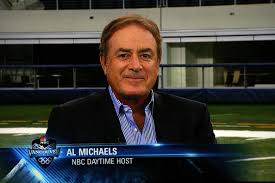
The major networks holding the rights have made a habit of devoting many daytime weekday hours to both the Summer and Winter Olympic games.
Summary
Several of these examples involve special circumstances such as rain postponements, tie-breakers, or events taking place on the day before/after a major holiday. The yearly staples which still wind up on "regular" daytime weekday TV are:
For the purposes of this post, I am only considering telecasts on the major networks (CBS, NBC, ABC, and Fox) and I am excluding major holidays.
MLB
 From 1947-1970, all weekday World Series games were televised in the afternoon. NBC also aired two weekday afternoon games in 1971 sandwiched around the first prime time World Series telecast. The last weekday afternoon World Series telecast took place in 1972 when rain impacted the original weekday prime time schedule and NBC carried the rescheduled game 5 on a Friday afternoon.
Since 1969, most postseasons have featured at least one League Championship Series game on network TV on a weekday afternoon. The exceptions are:
- 1975 (regional weeknight coverage in prime time)
- 1994 (no postseason)
- 1995 (regional weeknight coverage in prime time via the ill-fated Baseball Network)
- 2002 and 2005 (both years, Fox would have televised a weekday afternoon game had one series not ended early)
- 2007 (all Fox LCS telecasts were at night)
Major networks also provided weekday afternoon coverage of the tie-breaker series in 1951, 1959 and 1962 and tie-breaker games in 1978 and 1980.
From 1949-1966, every MLB All-Star game was televised on a weekday afternoon. The same was true of the 1969 game which was rescheduled on a Wednesday afternoon following a rainout the previous night.
College basketball
From 1991 to the present, CBS has presented afternoon coverage of the opening Thursday and Friday of the NCAA Tournament.
On Friday Dec 31 in 2010, CBS televised an afternoon regular season game.
College football
Starting with 1973, the major networks have provided one or more afternoon telecasts annually on "Black Friday" - the day after Thanksgiving. Also, during the bowl season, networks have often televised weekday afternoon games on dates such as Dec 31 and Jan 2.
NFL
For many years, the NFL avoided playing any games on Christmas Day. When the holiday fell on a Sunday, this policy resulted in Monday afternoon Dec 26 telecasts of the NFL Championship game on NBC in both 1955 and 1960. In 1977, CBS televised a divisional playoff doubleheader on Monday Dec 26. CBS also aired a wild-card playoff game on Monday Dec 26 in both 1983 and 1988.
CBS televised an afternoon regular season game on Friday Dec 31 in 1993. Fox provided afternoon telecasts on Friday Dec 24 in both 1999 and 2004.
Golf
Going back to 1996, NBC has annually televised 2 hours in the late afternoon of the Thursday and Friday rounds of the US Open.
CBS provided Friday afternoon coverage of the Masters in 1956 and 1957.
Major networks added Monday afternoon coverage of 18-hole playoffs for:
- the Masters in 1962, 1966 and 1970
- the US Open in 1965, 1966, 1971, 1975, 1984, 1988, 1990, 1991, 1994, 2001, and 2008
- the PGA Championship in 1961 and 1967
- the Masters in 1961, 1973 and 1983
- the US Open in 1983 and 2009
- the British Open in 1988
- the PGA Championship in 1976, 1986, and 2005
For several years, CBS has televised Friday afternoon action during the second week of the US Open. Since 2008, CBS has also provided a late afternoon telecast of the men's finals on Monday. From 2008-2011, rain necessitated the Monday finish. Since 2012, the tournament has been scheduled to conclude on Monday.
Similarly, NBC has carried daytime weekday coverage for many years during the second week of the French Open tournament although much of that action has been on tape delay. NBC did the same for Wimbledon when it held the network TV rights.
NHL
NBC televised the 2012 Winter Classic on Monday afternoon Jan 2 as New Year's Day fell on a Sunday.
Auto racing
The 1997 Indianapolis 500 was postponed by rain on Sunday and suspended after 15 laps on Monday (Memorial Day). It was resumed on Tuesday May 27 and ABC provided a daytime telecast of the race.
Note: The 2012 Daytona 500 was postponed by rain on Sunday and Fox had planned to televised the rescheduled event on Monday Feb 27 at noon. However, additional rain caused the race to be pushed back to Monday night so the Fox telecast wound up in prime time.
Olympics
The major networks holding the rights have made a habit of devoting many daytime weekday hours to both the Summer and Winter Olympic games.
Summary
Several of these examples involve special circumstances such as rain postponements, tie-breakers, or events taking place on the day before/after a major holiday. The yearly staples which still wind up on "regular" daytime weekday TV are:
- NCAA Tournament opening Thursday and Friday afternoon sessions
- US Open golf Thursday and Friday rounds
- some action from the second week of tennis majors
- usually at least one game of the MLB LCS
Tuesday, August 20, 2013
Inside the Pages: 1976 PRO! NFL game program
For a change of pace, I am going to take a look inside the pages of a 1976 NFL game program. PRO! was the official magazine of the NFL which the league produced and sold at stadiums on game days.
I bought this publication when I attended the 10/31/76 Eagles-Giants contest at Giants Stadium (the third-ever regular season game at this new venue). The issue is labelled Giants Edition and has a cover price of $1. While the program contains a number of color photos, a sizable percentage of the pictures are black-and-white.
 As one might expect, the program contains basics such as team rosters, schedules, and statistics. But I'd like to focus on some of the more interesting content.
My favorite piece is the PRO! Talk feature which has a conversion with Tom Brookshier who was in his second full season as the #1 analyst on the CBS telecasts. That article focuses on Brookshier's broadcasting career which started on Philadelphia radio in 1962. It includes a detailed recap of his infamous Duane Thomas "Evidently" interview during the Super Bowl 6 postgame show. The story also covers his TV partnership with Pat Summerall which began with the syndicated NFL Films highlight show This Week in Pro Football. The interview also delves into the decision by CBS to pair this duo together midway through the 1974 season and Brookshier shares his perspective on their early days as a booth tandem. Brookshier incorrectly recalls their first telecast together as being a Giants-Cardinals game in St Louis. (The opponent that day in St Louis was actually the Redskins.) Brookshier also describes the day that he and Summerall were awarded the Super Bowl 10 booth assignment and spends several paragraphs recapping that telecast from January of that year.
Bert Jones and cover subject Ken Anderson were among the active players profiled in the issue. There is also an article on the strongest players in the NFL. That story which attributes the increased strength to weightlifting and Nautilus training reads eerily now with the hindsight of the steroid use in the sport at that time.
 The program also contains retrospectives on retired stars such as Chuck Bednarik and Gale Sayers and a look back at the 1962 Texans-Oilers AFL Championship game with the infamous Abner Haynes declaration "we'll kick to the clock" after winning the overtime coin toss.
A sampling of other content:
- an illustrated chart of 24 official signals from touchdown to unsportsmanlike conduct
- a section on ground rules which contains field and goal post dimensions and the official specifications for the Wilson game footballs
- a detailed rundown of how NFL timing rules change inside the 2-minute warning along with strategy tips for running a 2-minute offense
- a list of the contestants in the Punt Pass and Kick competition that afternoon
- a preview of the next edition of PRO!
I found it quite fascinating to look back at the technology ads from that era. Western Union took out a large ad for its mailgram service (1970s Twitter anyone?). Promising next business day delivery, it encourages you to send a mailgram to an NFL player and lists the mailing addresses for all 28 league teams. Royce Electronics promotes their latest CB radio. Panasonic ("just slightly ahead of our time") pitches portable cassette tape recorders in one ad and highlights 19" TVs in another. And Sony has a full-page spot on the new Betamax deck (sort of a 1970s version of a DVR) with a suggested retail price of $1,300!!


In the pre-internet days, publications would often contain several mail-in offers. The magazine has a mail-order form for purchasing one or both volumes of an NFL Films music soundtrack for $6 per LP record. Another one enables you to pre-order an official Super Bowl 11 program ($2.50) or poster ($1.75). There is also a clip-out ballot for voting on the AFC and NFC rookie of the year sponsored by Old Spice.


Monday, February 18, 2013
History of #1 analyst demotions
<UPDATE 6/9/2016: Added the demotions of Harold Reynolds and Tom Verducci as co-#1 Fox MLB analysts.>
<UPDATE 9/16/2013: Added the demotion of Clark Kellogg as lead CBS college basketball analyst.>
CBS analyst Phil Simms received many unfavorable reviews for his recent Super Bowl 47 broadcast performance and some critics have even suggested that CBS might (or should) demote him from the lead NFL analyst position.
 Simms has been the #1 NFL analyst at CBS for 15 seasons. He started there in 1998 working alongside Greg Gumbel and has been paired with Jim Nantz since 2004. For the three years prior to his CBS stint, he was one of two analysts on the #1 crew for NBC.
The post-Super Bowl speculation regarding CBS and Simms got me wondering about the historical frequency of such a move. So I decided to research cases where a TV network actually demoted its #1 analyst. Specifically, I looked at situations where CBS, NBC, ABC or Fox covered a sport using multiple announcer teams and I focused on the NFL, NBA, MLB, college basketball and college football.
For the purposes of this post, I am defining demotion as a case where the former "A" team analyst returns to the same network the following season on a lower tier broadcast crew.
Based on this research, no lead analyst with the longevity of Simms has ever been demoted to a lower tier crew on the same network. I only found 7 instances where a network demoted a #1 analyst who had been in that position for at least 5 years. In two of those cases, the "demoted" analyst actually moved into a play-by-play position. And in four of those cases, the network made the move to fit a newly hired broadcaster onto the "A" team.
Here is a closer look at those seven demotions ordered by longest tenure:
 Tony Kubek (14 years as lead NBC MLB analyst)
Kubek had been the top analyst for the NBC baseball Game of the Week from 1969-1982 working first with Curt Gowdy and later with Joe Garagiola. In 1983, NBC hired Vin Scully as its lead play-by-play voice and Vin wanted no part of a three-man booth. So NBC decided to shift Garagiola into the lead analyst role alongside Scully and demoted Kubek to the "B" team where he worked with Bob Costas. Kubek remained in the #2 analyst role at NBC for 7 years. I believe this ranks as the most controversial lead analyst demotion of all time. On the plus side, Bob and Tony meshed so well together and I still consider them my favorite national baseball telecast tandem.
Bob Griese (12 years as lead ABC college football analyst)
ABC had used Griese as the top analyst for its NCAA games starting in 1987 where he worked with Keith Jackson. Griese remained in that role through the 1998 season. In 1999, ABC shuffled its broadcast crews and went without a true #1 team after Jackson switched to primarily covering west coast games. Griese remained on one of the crews which ABC treated as essentially co-#1. However, the network used Gary Danielson as the analyst for the BCS championship game that year.
Merlin Olsen (10 years as lead NBC NFL analyst)
Olsen had been in the #1 role at NBC from 1979-1988 working alongside Dick Enberg. In 1989, NBC brought in Bill Walsh as its new top analyst and demoted Olsen to the #2 slot. Merlin remained at NBC for only one season before taking an analyst position with CBS.
Bud Wilkinson (10 years as lead ABC college football analyst)
Wilkinson had served as the lead analyst on the ABC NCAA package from 1966 to 1975. He worked first with Chris Schenkel and later with Keith Jackson. In 1976, ABC demoted Wilkinson after it hired recently retired coach Ara Parseghian as lead analyst. Wilkinson remained with ABC for one season calling lower tier games.
Tom Brookshier (6.5 years as lead CBS NFL analyst)
Brookshier had been the lead CBS analyst since midway through the 1974 season when the network moved Pat Summerall into the top play-by-play role. That duo formed the #1 CBS team through the 1980 season. In 1981, CBS elevated John Madden into the lead analyst spot and shifted Brookshier to a play-by-play position on a lower tier crew. Brookshier remained with CBS for 6 more seasons after the demotion.
Don Drysdale (5 years as lead ABC MLB analyst)
Drysdale had been the top analyst on ABC Monday Night Baseball from 1978-1982. In 1983, ABC hired recently retired manager Earl Weaver as the new lead analyst. Drysdale stayed with ABC for 4 more seasons and became the play-by-play announcer on the "B" team.
Clark Kellogg (5 years as lead CBS college basketball analyst)
Kellogg was the #1 analyst on NCAA basketball for CBS 2008-09 through 2012-13. In September 2013, CBS promoted Greg Anthony to lead analyst. Kellogg became the lead studio analyst, but continued to serve as a game analyst on a lower tier crew.
Many cases involving a change to #1 analyst position featured an announcer retiring or moving to another network. Most of the long tenured lead analysts such as Billy Packer, Al McGuire, John Madden, and Tim McCarver were never demoted.
For completeness, here is a summary of the other cases when a network demoted its top analyst:
NFL
Kyle Rote (3 years)
MLB
Sandy Koufax (2 years)
NBA
Tom Heinsohn (4 years)
college football
Ara Parseghian (1 year)
<UPDATE 9/16/2013: Added the demotion of Clark Kellogg as lead CBS college basketball analyst.>
CBS analyst Phil Simms received many unfavorable reviews for his recent Super Bowl 47 broadcast performance and some critics have even suggested that CBS might (or should) demote him from the lead NFL analyst position.
 Simms has been the #1 NFL analyst at CBS for 15 seasons. He started there in 1998 working alongside Greg Gumbel and has been paired with Jim Nantz since 2004. For the three years prior to his CBS stint, he was one of two analysts on the #1 crew for NBC.
The post-Super Bowl speculation regarding CBS and Simms got me wondering about the historical frequency of such a move. So I decided to research cases where a TV network actually demoted its #1 analyst. Specifically, I looked at situations where CBS, NBC, ABC or Fox covered a sport using multiple announcer teams and I focused on the NFL, NBA, MLB, college basketball and college football.
For the purposes of this post, I am defining demotion as a case where the former "A" team analyst returns to the same network the following season on a lower tier broadcast crew.
Based on this research, no lead analyst with the longevity of Simms has ever been demoted to a lower tier crew on the same network. I only found 7 instances where a network demoted a #1 analyst who had been in that position for at least 5 years. In two of those cases, the "demoted" analyst actually moved into a play-by-play position. And in four of those cases, the network made the move to fit a newly hired broadcaster onto the "A" team.
Here is a closer look at those seven demotions ordered by longest tenure:
Kubek had been the top analyst for the NBC baseball Game of the Week from 1969-1982 working first with Curt Gowdy and later with Joe Garagiola. In 1983, NBC hired Vin Scully as its lead play-by-play voice and Vin wanted no part of a three-man booth. So NBC decided to shift Garagiola into the lead analyst role alongside Scully and demoted Kubek to the "B" team where he worked with Bob Costas. Kubek remained in the #2 analyst role at NBC for 7 years. I believe this ranks as the most controversial lead analyst demotion of all time. On the plus side, Bob and Tony meshed so well together and I still consider them my favorite national baseball telecast tandem.
Bob Griese (12 years as lead ABC college football analyst)
ABC had used Griese as the top analyst for its NCAA games starting in 1987 where he worked with Keith Jackson. Griese remained in that role through the 1998 season. In 1999, ABC shuffled its broadcast crews and went without a true #1 team after Jackson switched to primarily covering west coast games. Griese remained on one of the crews which ABC treated as essentially co-#1. However, the network used Gary Danielson as the analyst for the BCS championship game that year.
Merlin Olsen (10 years as lead NBC NFL analyst)
Olsen had been in the #1 role at NBC from 1979-1988 working alongside Dick Enberg. In 1989, NBC brought in Bill Walsh as its new top analyst and demoted Olsen to the #2 slot. Merlin remained at NBC for only one season before taking an analyst position with CBS.
Bud Wilkinson (10 years as lead ABC college football analyst)
Wilkinson had served as the lead analyst on the ABC NCAA package from 1966 to 1975. He worked first with Chris Schenkel and later with Keith Jackson. In 1976, ABC demoted Wilkinson after it hired recently retired coach Ara Parseghian as lead analyst. Wilkinson remained with ABC for one season calling lower tier games.
Tom Brookshier (6.5 years as lead CBS NFL analyst)
Brookshier had been the lead CBS analyst since midway through the 1974 season when the network moved Pat Summerall into the top play-by-play role. That duo formed the #1 CBS team through the 1980 season. In 1981, CBS elevated John Madden into the lead analyst spot and shifted Brookshier to a play-by-play position on a lower tier crew. Brookshier remained with CBS for 6 more seasons after the demotion.
Don Drysdale (5 years as lead ABC MLB analyst)
Drysdale had been the top analyst on ABC Monday Night Baseball from 1978-1982. In 1983, ABC hired recently retired manager Earl Weaver as the new lead analyst. Drysdale stayed with ABC for 4 more seasons and became the play-by-play announcer on the "B" team.
Clark Kellogg (5 years as lead CBS college basketball analyst)
Kellogg was the #1 analyst on NCAA basketball for CBS 2008-09 through 2012-13. In September 2013, CBS promoted Greg Anthony to lead analyst. Kellogg became the lead studio analyst, but continued to serve as a game analyst on a lower tier crew.
Many cases involving a change to #1 analyst position featured an announcer retiring or moving to another network. Most of the long tenured lead analysts such as Billy Packer, Al McGuire, John Madden, and Tim McCarver were never demoted.
For completeness, here is a summary of the other cases when a network demoted its top analyst:
NFL
Kyle Rote (3 years)
- #1 for NBC from 1968-1970
- demoted in 1971 for Al DeRogatis
- remained with NBC in #2 analyst role for 3 years
- #1 for NBC in 1977
- partially demoted in 1978 when NBC essentially used co-#1 crews of Brodie (paired with Curt Gowdy) and Merlin Olsen (paired with Dick Enberg)
- fully demoted in 1979 when NBC made Enberg and Olsen #1
- remained with NBC in analyst role through 1984
- #1 for NBC from 1992-1994
- demoted in 1995 for the duo of Paul Maguire and Phil Simms
- remained with NBC in analyst role for 3 years
MLB
Sandy Koufax (2 years)
- co-#1 for NBC from 1967-1968 (Koufax and Pee Wee Reese were on a 3-man "A" crew)
- demoted in 1969 for Tony Kubek
- remained with NBC as "B" team analyst for 4 years
- #1 for ABC from 1976-1977
- demoted in 1978 for Don Drysdale
- remained with ABC as "B" team analyst for 5 years
- co-#1 for Fox from 2014-2015
- both demoted in 2016 for John Smoltz
- each remained with Fox in a lower-tier game analyst role
NBA
Tom Heinsohn (4 years)
- #1 for CBS from 1983-84 to 1986-87
- demoted in 1987-88 season for Billy Cunningham
- remained with CBS in analyst role for 3 years
- #1 for NBC from 1993-94 to 1996-97
- demoted in 1997-98 season for Doug Collins and Isiah Thomas
- remained with NBC in analyst role for 4 years
- #1 for ABC from 2005-05 to 2005-06
- demoted in 2006-07 for Mark Jackson and Jeff Van Gundy
- has remained with ABC in #2 analyst role ever since
college football
Ara Parseghian (1 year)
- #1 for ABC in 1976
- partially demoted in 1977 when ABC hired Frank Broyles - ABC essentially treated both Broyles and Parseghian as #1 analysts by alternating which of them was paired with Keith Jackson each telecast
- fully demoted in 1981 when ABC made Broyles the sole #1 analyst
- remained with ABC as an analyst that year before moving to CBS in 1982
- #1 for CBS from 1982-1984
- demoted in 1985 for Ara Parseghian
- remained with CBS as an analyst for 5 more years (and was reinstated as the #1 analyst in 1987)
Monday, January 28, 2013
The infamous Tom Brookshier "Evidently" interview after Super Bowl 6
Here is a clip of the postgame interviews conducted by Pat Summerall and Tom Brookshier from the CBS telecast of Super Bowl 6 on 1/16/1972 after the Cowboys defeated the Dolphins 24-3.
This postgame show is best remembered for the extremely awkward interview that Brookshier conducted with Cowboys running back Duane Thomas who had not been talking to the media. The exchange starts at the 6:59 mark. After some rambling, Brookshier asked a rather inane question and Thomas uttered the classic one-word response of "Evidently". After a round of laughter, the clearly nervous Brookshier then redirected a different form of the question to Jim Brown before coming back to ask Thomas another question. Eventually Brown stepped in to speak on behalf of Thomas and essentially brought the interview to a conclusion. The entire sequence was quite bizarre and it haunted Brookshier for years.
The televised locker room interview scene looks quite amateurish compared to what one would see today. During the interviews, you can see many other media members milling around in close proximity. Multiple times you can see someone obstructing the camera shot of the interview. And Thomas and Brown both exit and walk right in front of Brookshier while he is still speaking. It was also interesting to hear both Summerall and Brookshier refer to the location as the "dressing room".
The 9:47 mark of the video has the original footage of the Ray Scott call of the touchdown run by Thomas. Scott and Summerall were the announcers on the CBS telecast.
This postgame show is best remembered for the extremely awkward interview that Brookshier conducted with Cowboys running back Duane Thomas who had not been talking to the media. The exchange starts at the 6:59 mark. After some rambling, Brookshier asked a rather inane question and Thomas uttered the classic one-word response of "Evidently". After a round of laughter, the clearly nervous Brookshier then redirected a different form of the question to Jim Brown before coming back to ask Thomas another question. Eventually Brown stepped in to speak on behalf of Thomas and essentially brought the interview to a conclusion. The entire sequence was quite bizarre and it haunted Brookshier for years.
The televised locker room interview scene looks quite amateurish compared to what one would see today. During the interviews, you can see many other media members milling around in close proximity. Multiple times you can see someone obstructing the camera shot of the interview. And Thomas and Brown both exit and walk right in front of Brookshier while he is still speaking. It was also interesting to hear both Summerall and Brookshier refer to the location as the "dressing room".
The 9:47 mark of the video has the original footage of the Ray Scott call of the touchdown run by Thomas. Scott and Summerall were the announcers on the CBS telecast.
Friday, January 4, 2013
NBCSN four-part series on Business of the NFL
NBC Sports Network is launching a four-part series on the Business of the NFL which chronicles the business decisions throughout its history which led to the explosive growth of the league. Part 1 of the Star Spangled Sundays series documents how the NFL used television to significantly boost the popularity of pro football and overtake baseball as the #1 sport in the United States. This initial 60-minute episode Rise of a Colossus debuts on Tues 1/8 at 10 pm ET with multiple replays scheduled.
The interview subjects include the following from a TV perspective: Bob Costas, Al Michaels, Don Ohlmeyer, David Hill, and Steve Bornstein.
The subsequent episodes in this series (subtitled Brand NFL, Labor Pains, and Super Sunday) will premiere each Tuesday in January on NBCSN.
The interview subjects include the following from a TV perspective: Bob Costas, Al Michaels, Don Ohlmeyer, David Hill, and Steve Bornstein.
The subsequent episodes in this series (subtitled Brand NFL, Labor Pains, and Super Sunday) will premiere each Tuesday in January on NBCSN.
Tuesday, December 18, 2012
Original NBC footage of The Immaculate Reception
With the 40th anniversary of The Immaculate Reception approaching, here is a look at the original NBC call of that controversial Franco Harris touchdown from the 12/23/1972 divisional playoff game between the Steelers and Raiders. The network rebroadcast this footage during the 1997 playoffs on the 25-year mark of the long-debated play.
Curt Gowdy and Al DeRogatis were the announcers that day although only Gowdy appears on this clip. I suspect that NBC had already dispatched DeRogatis from the booth to prepare for postgame interviews.
Curt Gowdy and Al DeRogatis were the announcers that day although only Gowdy appears on this clip. I suspect that NBC had already dispatched DeRogatis from the booth to prepare for postgame interviews.
Subscribe to:
Posts (Atom)